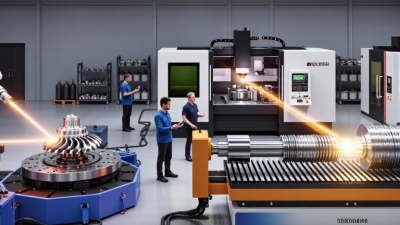
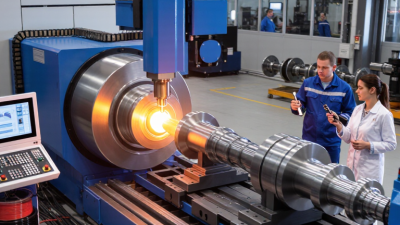
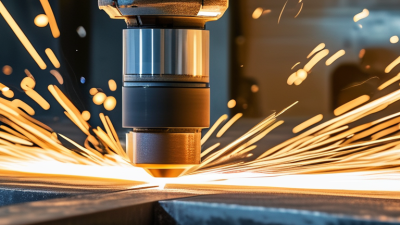
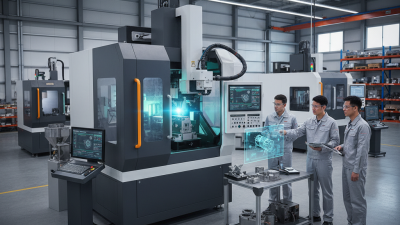
Choosing a Laser Cladding System in 2026 requires more than comparing laser power or equipment prices. The right system must match your alloy, part geometry, production volume, and repair strategy. A turbine blade, mining roller, and hydraulic cylinder demand different process conditions. Their surfaces behave differently under heat.
Professor William M. Steen, a pioneer in laser materials processing, offered a useful reminder: “The laser is a tool, not a magic wand.” That principle still matters. A powerful laser cannot compensate for unstable powder feeding, poor shielding gas coverage, or careless substrate preparation. Real performance depends on the complete process chain.
This guide examines the practical decisions behind a reliable Laser Cladding System. It considers laser wavelength, beam profile, powder feeder accuracy, coaxial or lateral delivery, motion control, and closed-loop monitoring. It also evaluates dilution, heat-affected zones, deposition rate, surface finish, and repair consistency. Small details matter. A slight change in powder flow can alter bead height and final machining allowance.
Experience in the workshop often challenges laboratory assumptions. A system may produce excellent single-track samples yet struggle with curved components or long production cycles. That gap deserves attention. No buying guide can remove every uncertainty. However, careful trials, documented process windows, operator training, and responsive technical support can reduce costly surprises.
The strongest choice is not always the fastest or most expensive machine. It is the system that delivers repeatable results, measurable efficiency, and room for future process development. Safety and regulatory compliance must remain part of that decision.
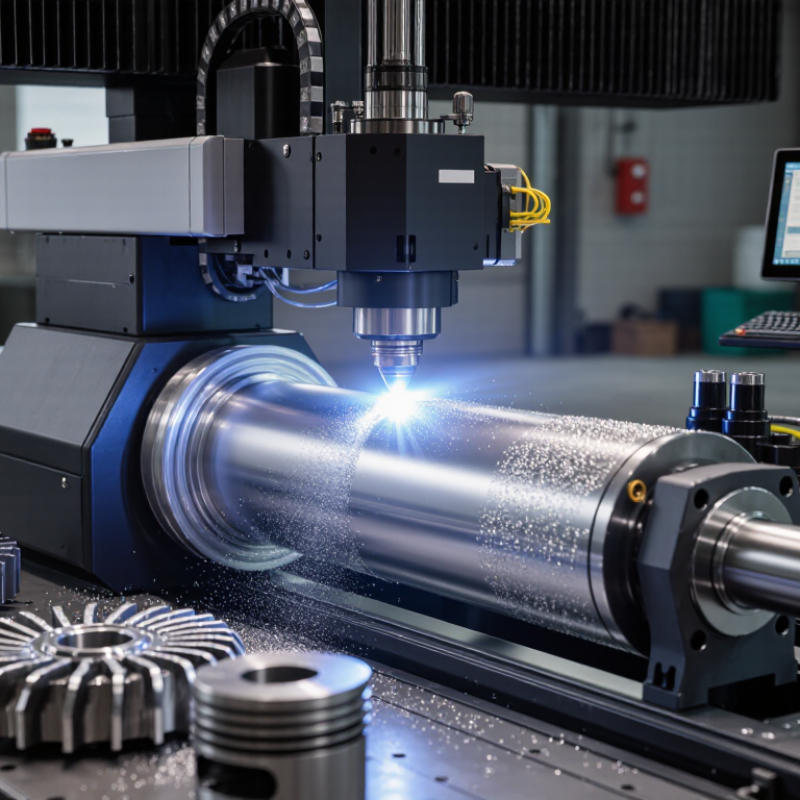
Define the repair goal before comparing equipment. Is the priority dimensional restoration, wear resistance, corrosion protection, or reduced heat input? A shaft needing 2 millimeters of build-up requires different control from a turbine edge facing erosion. Record the damaged area, tolerance, hardness, and service temperature. Measure twice.
Materials decide the process window. Stainless steels, nickel alloys, cobalt alloys, and carbide blends melt differently. Powder size, flow rate, laser power, and travel speed must match the substrate. A 2024 MarketsandMarkets analysis projected the laser cladding equipment market to grow at about 10% annually through 2028. That growth reflects wider industrial use, but it does not guarantee a suitable repair result.
Repair requirements should include access, geometry, production volume, and inspection methods. Ask for cross-section data, dilution measurements, porosity results, and adhesion testing from comparable trials. ASTM guidance on additive manufacturing emphasizes process qualification and repeatable inspection, not attractive surface appearance alone. In field work, poor fixturing can distort an otherwise sound layer. That part is often underestimated. Consider powder recovery, operator training, laser safety controls, and maintenance time. A system may offer high power yet waste material on small repairs. I would also challenge optimistic cycle-time claims; real fixtures, cleaning, and inspection can change the calculation.
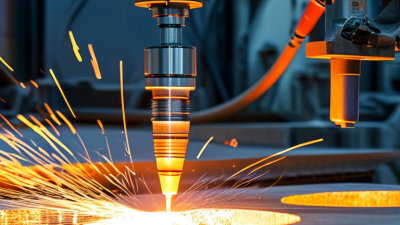
Choosing a laser cladding system starts with the repair goal, not the machine’s advertised power. Powder-fed systems support accurate deposition on complex surfaces and allow quick material changes. They work well for localized wear, sealing surfaces, and thin protective layers. Wire-fed systems usually provide higher material efficiency and cleaner handling. They can suit larger components, but wire placement becomes difficult around narrow edges and curved features.
The process configuration also affects deposit quality. Coaxial powder delivery keeps material aligned with the laser spot during multi-axis movement. Off-axis delivery can lower initial costs, yet it may require careful torch orientation near corners. A robotic multi-axis cell offers flexible access to shafts, valves, and irregular parts. A fixed-head system is simpler for repeated cylindrical repairs. Closed-loop monitoring adds reliability by tracking melt-pool temperature, height, or reflected light during deposition.
A sealed cell helps control powder escape, shielding gas, and operator exposure. An open system may be practical for oversized parts, but airflow can disturb the melt pool. Trial coupons should match the real substrate, surface preparation, and layer thickness. I have seen attractive samples fail after machining because dilution was too high. Lower laser power may improve bonding, but insufficient energy can create pores or weak interfaces. Scan speed, powder flow, and overlap need joint adjustment. Early test results are useful, but never final; actual geometry, thermal history, and operator handling can change the result.
Choosing a laser cladding system starts with the repair task, not the machine brochure. Define the substrate, coating alloy, layer thickness, and expected production rate. A fiber laser often provides stable energy delivery and efficient operation. However, raw power is not enough. Check beam quality, modulation control, cooling capacity, and service access. A 3 kW source may suit small shafts, while larger surfaces may require higher output.
The cladding head controls how consistently the melt pool forms. Inspect its working distance, shielding gas paths, optics protection, and motion compatibility. A coaxial design can support complex toolpaths, but it may demand tighter powder alignment. Side-feed heads can be easier to adjust during maintenance. They are not always ideal for curved surfaces.
During practical trials, measure bead width, dilution, porosity, and surface waviness. Visual inspection alone can miss defects.
Test feed stability at low and high rates, especially with irregular particle shapes. Ask for data on carrier gas consumption and powder recovery. A narrow particle-size range usually improves deposition consistency, but it may raise material costs.
We once treated feed rate as a minor setting. That was a mistake. Small fluctuations created visible ridges across the coating.
Record actual results from your own powder, substrate, and scanning speed. Laboratory demonstrations can look excellent. Your production floor may behave differently.
Choosing a laser cladding system in 2026 requires more than comparing laser power. In a production review, watch how operators load parts, set powder flow, and recover from alarms. Automation should reduce variation, not hide it. Check whether motion paths, feed rates, and thermal limits can be adjusted without rewriting complex code. Ask for recipe permissions, audit trails, and recovery steps after sensor failure. Simple screens matter. Operators work beside noise, heat, and protective enclosures.
Control software should display melt-pool data, gas pressure, powder delivery, and axis status in one readable view. Historical graphs help engineers connect defects with process changes. Data export is essential for traceability and customer records. Avoid systems that lock useful information behind unclear menus. Safety needs physical guarding, door interlocks, emergency stops, fume extraction, and a documented risk assessment. Test each safeguard during commissioning, not during an incident. Training should cover abnormal conditions, including blocked nozzles and unexpected restarts. Human judgment still matters.
Maintenance requirements can decide the real cost. Inspect nozzle alignment, optics, filters, cooling circuits, powder feeders, and cable chains. Request service intervals, spare-part lead times, calibration methods, and fault histories. A clear maintenance checklist is more valuable than impressive brochures. Leave access around the work zone. It saves hours later. I would also test a deliberately imperfect job, such as low powder flow, and record the operator response. That exercise may expose weak alarms or confusing instructions. A system is ready when people can safely diagnose the second bead, not only produce the first perfect one.
How to Choose a Laser Cladding System in 2026?
Calculate Total Cost, Integration Needs, and Long-Term Performance
A laser cladding system should be judged by total cost, not purchase price. Include the laser source, powder feeder, motion platform, shielding gas, extraction, cooling, and safety equipment. Installation may also require electrical upgrades and floor reinforcement. Request a realistic quote with commissioning, operator training, and spare parts included. Small omissions become expensive later.
Integration deserves an early site review. Check communication protocols, robot reach, fixture access, ventilation, and existing production software. The system must fit your components, not only a laboratory coupon. Measure powder utilization, deposition rate, heat input, and cycle time using your actual materials. A short trial can reveal unstable feeding or excessive heat-affected zones. These details affect rework and production scheduling.
Long-term performance needs evidence. Ask for maintenance intervals, calibration procedures, service response times, and documented operating data. Inspect sample cross-sections for porosity, cracking, dilution, hardness, and bond strength. My first cost estimate was wrong because it ignored powder waste and setup time. That mistake was useful. A neat spreadsheet can still lie. Calculate cost per finished component across several years, including downtime and rejected parts. Choose the system that remains predictable under real production pressure, not the one with the most impressive specification sheet.
Five-year total cost of ownership comparison for three common automation levels. The model includes equipment, integration, maintenance, consumables, and estimated downtime costs. Values are planning benchmarks in USD and should be validated against project-specific supplier quotations.
A lower initial investment may involve higher labor and downtime exposure. Fully automated systems generally require more integration work at the beginning, but can reduce recurring operating costs and improve process consistency over a five-year period.