Leave Your Message

2026 Best Laser Cladding Systems for Global Buyers

Choosing the 2026 best Laser Cladding System requires more than comparing laser power or purchase prices. Global buyers need evidence from real production environments, not only polished brochures. A suitable system should deliver stable powder feeding, accurate beam control, consistent shielding gas, and repeatable coating thickness. These details matter when repairing turbine blades, hydraulic rods, mining rollers, or expensive injection molds.

“Laser cladding combines the advantages of welding and thermal spraying,” says Dr. Frank Gaumann, a recognized researcher in laser cladding technology. His observation remains relevant because modern systems must balance metallurgical bonding, low heat input, and practical production speed. Buyers should examine laser source quality, powder utilization, motion-axis accuracy, cooling performance, and software integration. Service response also matters. A technically impressive machine can become a costly burden when spare parts arrive slowly.

There is no universal winner.

This guide compares leading Laser Cladding System options for international purchasers in 2026. It considers build quality, process stability, automation, material compatibility, operator training, and long-term maintenance. It also looks at less visible issues, including calibration routines, dust management, and support across different time zones. Some claims require caution. Published deposition rates may depend on ideal laboratory conditions. Actual results can change with alloy shape, surface preparation, and operator experience. A careful buyer should request sample trials, process records, and customer references before signing a major order. Even then, uncertainty remains. Good engineering reduces risk, but it never removes every variable.
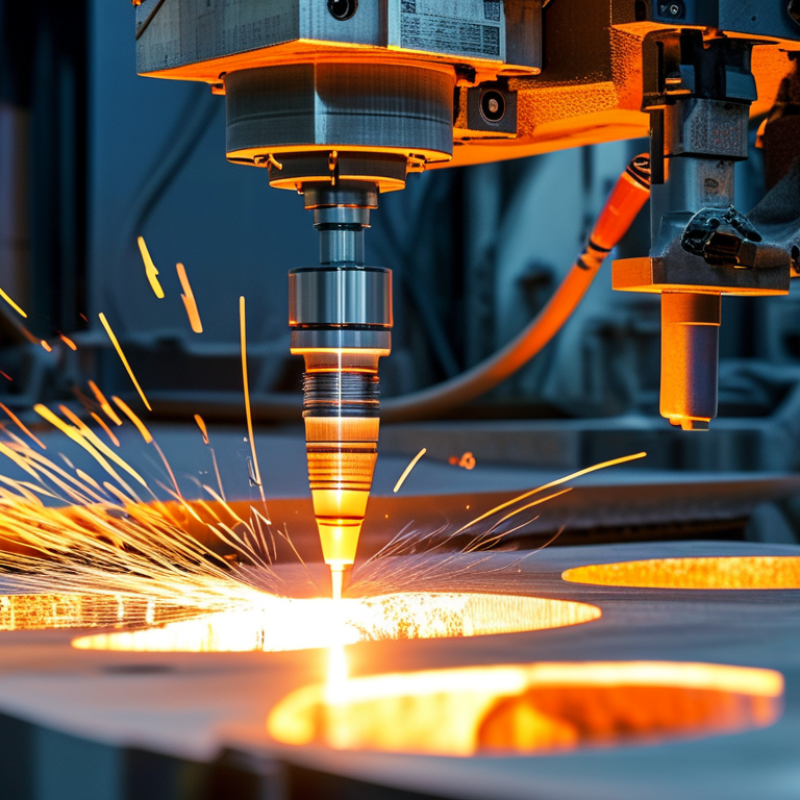
2026 Best Laser Cladding Systems for Global Buyers

Laser Cladding Systems: Definition, Purpose, and Core Principles

Laser Cladding Systems: Definition, Purpose, and Core Principles

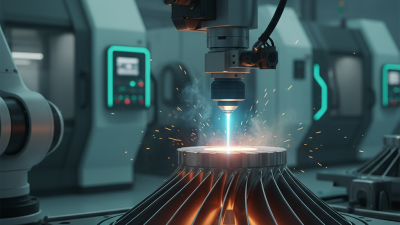
A laser cladding system deposits metal onto a prepared surface using concentrated laser energy. The process creates a controlled melt pool on the substrate. Powder or wire enters this pool and forms a metallurgically bonded layer. Unlike simple coating methods, laser cladding can produce low porosity and limited heat distortion when properly adjusted.

Its purpose is practical. Manufacturers use it to repair worn shafts, restore damaged moulds, and protect parts from abrasion, corrosion, or heat.

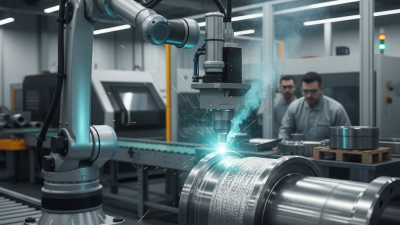
The system usually includes a laser source, material feeder, motion platform, shielding gas supply, and monitoring controls. Operators adjust laser power, travel speed, feed rate, spot size, and gas flow. Small changes matter. A fast scan may cause incomplete bonding, while excessive energy can increase dilution.

In field work, technicians often test the selected material on sample coupons before treating valuable components. They inspect layer thickness, hardness, bonding strength, surface cracks, and porosity. Process records also support repeatability between production batches.

However, no preset parameter works everywhere. Substrate chemistry, geometry, powder shape, and ambient conditions can change the result. This is where supplier documentation and operator experience become important. A shiny surface is not proof of a reliable layer. It may hide weak bonding beneath. Global buyers should request test data, maintenance guidance, safety documentation, and training details before installation. The machine may be advanced, but process discipline still determines performance.
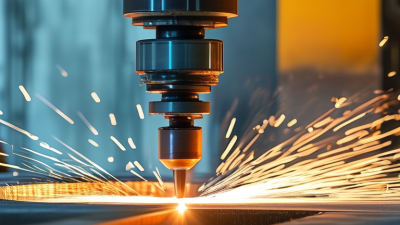

Key Technologies and Components in Modern Cladding Systems

2026 Best Laser Cladding Systems for Global Buyers

Key Technologies and Components in Modern Cladding Systems

Modern laser cladding systems combine a laser source, powder feeder, cladding head, motion platform, and control software. Each component affects deposit quality, production speed, and maintenance demands. A stable laser beam creates a controlled melt pool with limited heat input. This helps reduce distortion on valuable metal parts.

The powder feeder must deliver a consistent flow, even during long production cycles. Coaxial nozzles improve material distribution around complex surfaces. Optical sensors can monitor melt-pool temperature, layer height, and surface changes. Shielding gas protects the molten material from oxidation. Heat control matters. Effective cooling also protects optics, cables, and nearby mechanical components.

System selection should match the part size, alloy type, repair depth, and factory environment. A rigid motion platform improves accuracy on large components. Closed-loop control can correct some process variation in real time. However, no system removes every operator decision. Powder humidity, surface contamination, and imperfect calibration still create defects. That detail matters. Buyers should request practical test data, service procedures, spare-part availability, and operator training. A technically advanced system may still underperform if maintenance access is poor. Careful trials remain essential before global deployment.

2026 Best Laser Cladding Systems for Global Buyers - Key Technologies and Components in Modern Cladding Systems

Technical comparison of commonly used laser cladding architectures, process ranges, and major system components. Values are typical industry ranges and should be validated against the application, material, and machine configuration.

System Area Technology or Component Typical 2026 Specification Primary Function Global Buyer Considerations
Laser Source Continuous-wave fiber laser 2–12 kW output; approximately 1.03–1.08 μm wavelength; wall-plug efficiency commonly above 35% Provides stable and controllable energy for melting the substrate and additive material Confirm electrical requirements, cooling capacity, service support, beam-delivery compatibility, and local safety compliance
Powder Delivery Multi-hopper powder feeder One to four powder channels; typical feed rate of 5–100 g/min; closed-loop carrier-gas control Meters metallic powder into the melt pool with controlled flow and blending capability Evaluate powder utilization, hopper capacity, moisture protection, calibration method, and cleaning time
Wire Delivery Laser wire-feed unit Wire diameters commonly 0.8–2.0 mm; deposition rates approximately 1–10 kg/h, depending on material and power Feeds solid wire into the laser-generated melt pool with high material utilization Suitable for larger builds and repair work; verify wire straightening, spool standards, and feed-torque control
Deposition Head Coaxial powder nozzle Material delivery from multiple radial directions; typical track widths of 0.8–4 mm Maintains more consistent deposition during multi-axis movement and direction changes Check nozzle wear resistance, powder catch efficiency, focal distance, and accessibility around complex geometries
Deposition Head Off-axis powder nozzle Typical track widths of 1–6 mm; often configured for simpler access and lower initial cost Delivers powder at a fixed angle to the melt pool for repair and surface-treatment applications Confirm travel-direction limitations, collision clearance, and suitability for multi-axis toolpaths
High-Speed Processing High-speed laser cladding Travel speeds may reach approximately 10–100 m/min for thin protective layers; layer thickness often about 0.1–0.5 mm Applies thin, low-dilution coatings at high productivity Best for wear and corrosion protection; validate surface preparation, powder morphology, and required bond strength
Hybrid Processing Laser plus wire-arc or laser plus machining cell Laser deposition combined with arc deposition or in-process machining in one coordinated workflow Combines high deposition productivity with controlled heat input or near-net-shape finishing Consider cell footprint, process synchronization, fume extraction, maintenance, and programming complexity
Motion Platform CNC multi-axis machine Three to five controlled axes; typical positioning repeatability from ±0.02 to ±0.10 mm, depending on machine class Positions the workpiece and deposition head along programmed toolpaths Check working envelope, rotary-table load, axis speed, collision detection, and integration with CAD/CAM software
Motion Platform Industrial robotic arm Six-axis or seven-axis configuration; common payload range of approximately 10–250 kg Provides flexible access to large or irregular components and complex repair zones Assess absolute accuracy, calibration procedure, reach, payload at extension, guarding, and local integration capability
Process Monitoring Coaxial camera and melt-pool monitoring Real-time observation of melt-pool size, brightness, track position, and process interruptions Detects instability and supports automatic adjustment of laser power, travel speed, or material feed Prioritize systems with data logging, alarm thresholds, calibration tools, and exportable quality records
Height Control Laser displacement or optical height sensor Non-contact measurement for stand-off and deposited-layer height control Compensates for uneven substrates and cumulative height variation between layers Verify measurement range, reflective-surface performance, response time, and compatibility with hot surfaces
Atmosphere Control Argon or helium shielding system Typical local shielding flow of approximately 5–25 L/min, adjusted for nozzle design and process conditions Reduces oxidation, porosity, and contamination during deposition Review gas purity requirements, cylinder or bulk-gas availability, flow stability, and extraction design
Thermal Management Closed-loop chiller and workpiece cooling Temperature-controlled cooling for the laser source, optical head, and selected fixtures Maintains optical stability and limits distortion or excessive heat accumulation Confirm cooling capacity, ambient-temperature range, water quality requirements, and alarm interlocks
Materials Metal powder and wire feedstock Common materials include stainless steels, nickel alloys, cobalt alloys, tool steels, titanium alloys, and aluminum alloys Creates wear-resistant, corrosion-resistant, heat-resistant, or dimension-restoring layers Check particle-size distribution, wire chemistry, certification, storage conditions, and compatibility with the substrate
Typical Performance Laser-cladded layer Single-layer thickness commonly about 0.2–2.0 mm; dilution often targeted below approximately 10% Forms a metallurgically bonded layer with controlled heat-affected-zone depth Actual results depend on alloy, substrate, laser power, travel speed, overlap, preheating, and post-processing
Software CAD/CAM and process-control platform Toolpath generation, parameter libraries, simulation, recipe management, and production data logging Converts 3D geometry and repair data into repeatable deposition instructions Evaluate file-format support, offline programming, user permissions, digital traceability, and training requirements
Safety System Enclosed laser-rated work cell Interlocked enclosure, emergency stops, beam shielding, fume extraction, and warning indicators Protects operators from laser radiation, hot particles, fumes, and moving equipment Confirm applicable national standards, laser classification, ventilation design, access control, and inspection procedures
Quality Assurance Inspection and validation package Cross-section analysis, hardness testing, dimensional inspection, surface roughness measurement, and non-destructive testing as required Verifies bond integrity, geometry, material performance, and production repeatability Request documented acceptance criteria, calibration records, process qualification support, and application-specific test coupons
Note: Performance figures are indicative ranges for modern industrial laser cladding systems. Final selection should be based on the workpiece size, alloy combination, required coating thickness, deposition rate, dimensional tolerance, production volume, utilities, and regional compliance requirements.

How to Compare Laser Cladding Systems for Global Applications

Comparing laser cladding systems for global applications requires more than checking laser power. Start with the repair material, part geometry, and expected production volume. Powder-fed systems suit precise, complex surfaces, while wire-fed systems may reduce material waste on larger components. Confirm the usable work envelope, layer thickness, deposition rate, and cooling requirements. These details affect real output.

Ask for process data from materials similar to yours. A polished laboratory sample can hide problems. Request cross-section results, bond strength, hardness, porosity levels, and heat-affected-zone measurements. Review how the system handles stainless steel, nickel alloys, or carbide blends. Control software also matters. Operators need clear parameter adjustment, traceable recipes, and stable monitoring during long builds. Local voltage, gas availability, training, and maintenance support should be checked before purchase. Small omissions become expensive later.

Tips: Compare total operating cost, not only the equipment price. Include powder or wire usage, shielding gas, filters, energy, spare parts, and operator training. Test difficult geometries before approving a system. A supplier’s reference part may not represent your factory conditions. Ask whether validation can occur using your own material and component. Do not assume faster deposition means better economics; excessive heat can create distortion and additional finishing work. Global buyers should also examine documentation, safety features, export requirements, and response times for technical support. My practical preference is measurable evidence, although even good data needs cautious interpretation.

Top Selection Criteria: Materials, Performance, Cost, and Support

For 2026, selecting the best laser cladding system starts with material compatibility. A machine should handle the alloys used in your repair or manufacturing process. Common choices include nickel, cobalt, iron, and carbide-based powders. Ask for verified results using your actual substrate and coating material. Laboratory samples can look excellent, yet production surfaces may behave differently. Fit matters more.

Performance is more than laser power. Check deposition rate, melt-pool stability, coating density, dilution, and heat-affected zones. In practical evaluations, consistent powder feeding often matters as much as the laser source. Look for monitoring tools that record temperature, bead height, and process interruptions. A fast system is not useful if it creates excessive finishing work. Request repeatability data across several parts, not one successful demonstration.

Cost should include energy use, powder efficiency, optics, maintenance, software updates, and operator training. A lower purchase price may hide expensive downtime. Support deserves equal attention. Confirm spare-part availability, response times, installation guidance, and process training. Local technical assistance can protect production schedules. Service gaps hurt. No scorecard is perfect. Buyers should also question optimistic performance claims and calculate costs using their own labor, materials, and annual operating hours.

Buying and Operating Considerations for International Users

Global buyers should judge laser cladding systems by application fit, not promotional power ratings. A system for repairing hydraulic shafts may differ greatly from one for aerospace tooling. Request test coupons using your actual alloy, geometry, and target thickness. Measure dilution, bond strength, porosity, hardness, and surface finish. Small samples reveal costly surprises.

Check the operating environment before signing a purchase order. Confirm voltage, frequency, cooling requirements, compressed gas quality, ventilation, and floor space. Local technicians may need training in powder handling, laser safety, optical alignment, and emergency procedures. Spare lenses, nozzles, seals, and filters should be available through a clear regional supply plan. Downtime travels badly across borders.

Software compatibility also matters. Ask whether the system records laser power, travel speed, powder feed rate, and shielding gas flow. These records support repeatability and customer audits. Verify calibration methods and maintenance intervals. A perfect specification sheet can still mislead. Real performance depends on operator discipline, material preparation, and workshop cleanliness. Sometimes, a slower process gives better control. Buyers should calculate total ownership costs, including utilities, consumables, training, installation, import procedures, and service visits. The cheapest quotation may become the most expensive decision. No checklist catches everything. Build an acceptance test with measurable limits, signed responsibilities, and room to question unexpected results.