Leave Your Message
Choosing the right Laser Machinery supplier can shape production quality, operating costs, and long-term business resilience. Global buyers face a crowded market, with suppliers offering similar cutting speeds, power ratings, and automation claims. The differences often appear later, inside service contracts, software updates, training plans, and spare-parts availability.
Theodore H. Maiman, inventor of the first working laser, famously said, “The laser is a solution looking for a problem.” His observation still matters. A powerful machine is not automatically the right machine. Sheet thickness, material type, production volume, floor space, and operator skill should guide the decision.
This guide examines ten respected Laser Machinery suppliers for international buyers. It considers more than catalogue specifications. Each supplier is assessed through manufacturing capability, application support, quality control, technical documentation, and after-sales responsiveness. Practical details matter. Can the supplier provide a stable cutting sample? Are replacement lenses available locally? Will an engineer answer after installation?
The evaluation is not perfect. Supplier performance can vary by region, distributor, and project size. A company may excel with fiber laser cutting but offer weaker support for tube processing. Another may provide excellent machines but slower communication across time zones. Buyers should verify certifications, references, warranty terms, and total ownership costs before signing.
Some choices look obvious. They may not be. A lower purchase price can hide expensive downtime, while a premium system may exceed a smaller factory’s real needs. Careful comparison remains essential. Reliability is built through evidence, not attractive brochures.
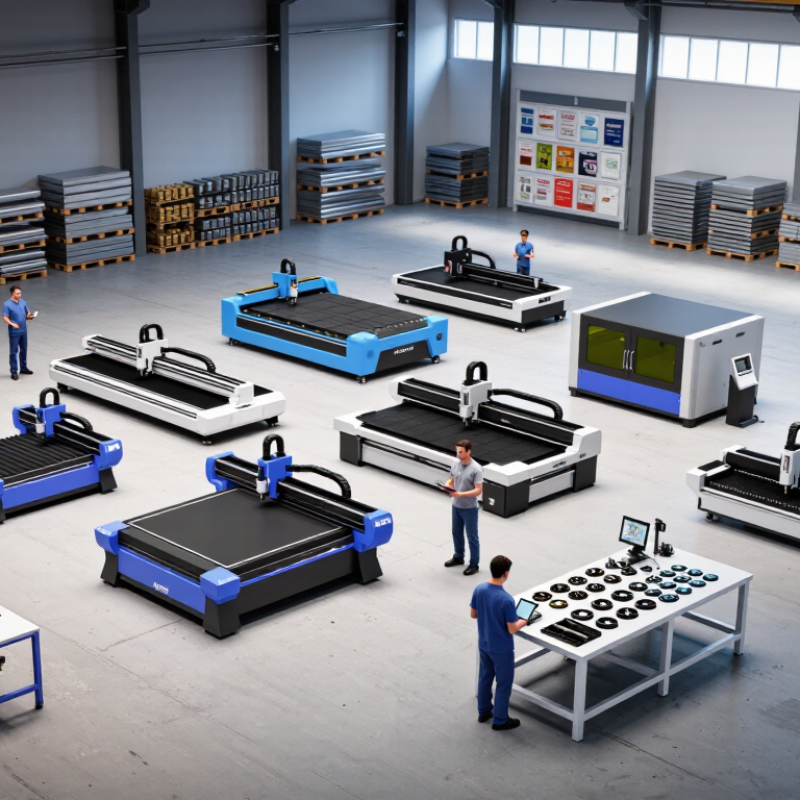
Choosing a laser machinery supplier requires more than comparing prices. The right partner should understand your materials, production volume, tolerances, and workshop conditions. Ask for sample processing with your actual material. A polished demonstration may hide problems that appear during long production runs.
Review the machine’s power stability, motion accuracy, cutting speed, and repeatability. Request measurable test results, not vague performance claims. Safety features, electrical documentation, and compliance records should be easy to verify. Reliable suppliers explain maintenance intervals and provide clear operating manuals. They also offer practical training for operators, not just a brief installation visit.
After-sales support often determines the machine’s real value. Check response times, spare-parts availability, remote diagnostics, and technician coverage in your region. Speak with several existing users about downtime and service quality. Their comments may reveal more than a sales presentation. Calculate the full ownership cost, including consumables, energy, software, training, and repairs. A low quotation can become expensive later.
Experience matters here. A supplier should recommend a suitable configuration, even when it reduces the order value. That honesty is important. Still, no supplier is perfect, and some technical promises deserve careful testing. Put delivery dates, acceptance standards, warranty terms, and training responsibilities in writing before payment. Small details matter.
| No. | Supplier Evaluation Area | What Global Buyers Should Verify | Relevant Technical or Commercial Fact | Why It Matters | Priority |
|---|---|---|---|---|---|
| 1 | Machine Application Fit | Confirm that the supplier has machines designed for the buyer’s material, process, production volume, and required tolerances. | Laser cutting, welding, marking, cleaning, drilling, and engraving require different optical systems, motion platforms, power levels, and process parameters. | A machine optimized for one laser process may not deliver acceptable results in another process. | Critical |
| 2 | Laser Source and Wavelength | Check the laser type, rated power, wavelength, pulse characteristics, expected operating life, and replacement cost. | Common industrial wavelengths include approximately 1,064 nm for fiber lasers, 10.6 μm for many CO₂ lasers, 355 nm for ultraviolet lasers, and 532 nm for green lasers. | Wavelength and pulse behavior affect absorption, heat input, marking contrast, cut quality, and compatibility with different materials. | Critical |
| 3 | Safety Compliance | Request the machine risk assessment, protective-enclosure information, interlock design, emergency-stop documentation, and applicable conformity documents. | Laser product safety is addressed internationally by IEC 60825-1, while laser processing machine safety is covered by standards such as ISO 11553-1. | Proper safety documentation supports legal importation, workplace compliance, operator protection, and insurance requirements. | Critical |
| 4 | Quality Management | Verify documented quality procedures, inspection records, calibration practices, traceability, and corrective-action processes. | ISO 9001 is a widely recognized quality-management standard, but certification alone does not guarantee machine performance or process capability. | A controlled manufacturing process can reduce assembly errors, inconsistent output, and repeat service problems. | High |
| 5 | Cutting or Processing Performance | Ask for sample tests using the buyer’s actual materials, thicknesses, geometries, finishes, and production requirements. | Published maximum thickness and speed figures depend on material grade, assist gas, nozzle condition, focal position, acceleration, and acceptable edge quality. | Application-specific testing is more reliable than comparing headline power or maximum speed alone. | Critical |
| 6 | Control Software and Integration | Evaluate controller usability, file compatibility, nesting functions, remote diagnostics, data export, and compatibility with existing production systems. | Industrial laser equipment commonly uses CAD/CAM or vector-based file workflows, while advanced systems may support network connectivity and production data exchange. | Better software integration can reduce setup time, operator errors, material waste, and production interruptions. | High |
| 7 | After-Sales Service and Training | Confirm installation support, operator training, preventive-maintenance instructions, troubleshooting procedures, and escalation contacts. | Laser systems may require alignment checks, optical cleaning, cooling-system maintenance, fume extraction, and periodic replacement of consumable components. | Effective service reduces downtime and helps operators maintain stable process conditions. | High |
| 8 | Spare Parts and Consumables | Request a recommended spare-parts list, part numbers, lead times, stock locations, and pricing for wear components. | Typical consumables can include protective windows, nozzles, lenses, filters, seals, coolant components, and other process-specific parts. | Local or regional parts availability can significantly shorten repair time and reduce production losses. | High |
| 9 | Total Cost of Ownership | Compare purchase price with shipping, installation, electricity, assist gas, extraction, cooling, maintenance, software, spare parts, and labor costs. | Operating expenses vary with laser power, duty cycle, gas consumption, chiller load, extraction requirements, maintenance intervals, and facility conditions. | A lower purchase price may result in a higher long-term cost if energy use, downtime, or service expenses are greater. | High |
| 10 | Warranty and Contract Terms | Review warranty duration, covered components, exclusions, response obligations, remote-support terms, acceptance testing, and payment conditions. | Warranty coverage should clearly distinguish the machine frame, laser source, optics, control system, chiller, electrical components, and consumable parts. | Clear contractual terms reduce disputes and provide measurable protection when equipment performance does not meet the agreed specification. | Critical |