Leave Your Message

2026 Best Laser Machinery Buying Guide for Global Buyers

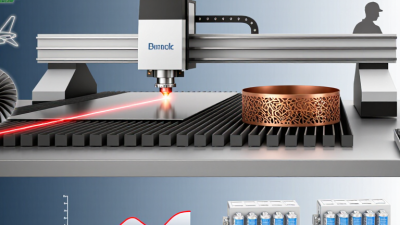
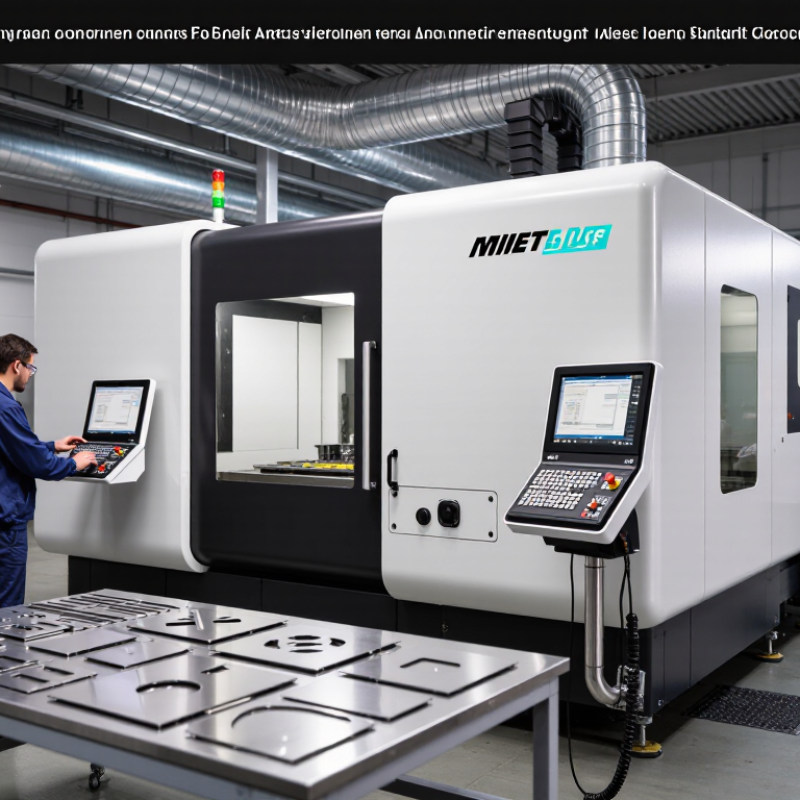
In 2026, Laser Machinery is no longer judged by power alone. Global buyers need reliable performance, safe operation, and predictable ownership costs. A machine may advertise high wattage, yet produce inconsistent cuts on thin stainless steel. Another model may offer impressive speed but require expensive maintenance. This guide examines the details that matter on a real production floor, including laser source quality, working area, motion accuracy, cooling systems, extraction, software, and operator training.

Buying across borders adds another layer of difficulty. Electrical requirements, installation conditions, spare-part availability, documentation, and local safety expectations can differ greatly. Buyers should request test samples using their actual materials, thicknesses, and design files. A clean cut on a supplier’s sample plate proves little if your workshop has unstable power or limited ventilation. Ask for service response times, warranty limits, installation support, and a clear list of included components. Good records reduce unpleasant surprises.

No machine is perfect. Specifications can look precise while hiding practical limitations. A lower purchase price may become costly after shipping, setup, consumables, and downtime. This guide therefore compares capability with evidence, not marketing language. It also encourages careful questions when supplier claims seem unusually confident. Independent inspections, documented testing, and conversations with experienced users can strengthen a buying decision. The right choice depends on your materials, production volume, workforce, budget, and future plans—not on a single headline number.
2026 Best Laser Machinery Buying Guide for Global Buyers

Laser Machinery Applications: Cutting, Welding, Marking, and Engraving

For global buyers, laser machinery should match real production tasks, not attractive specifications.

Cutting systems handle sheet metal, acrylic, wood, and other approved materials. Each material requires different power, speed, and focus settings. A thin stainless-steel panel may need controlled heat to prevent burrs and discoloration. Operators should test sample pieces before purchase.

Test before signing.

This step can reveal weaknesses in focus stability, fume extraction, and software control. Not every fast machine produces clean edges.

Laser welding joins compatible metals with concentrated heat and limited distortion. It suits frames, tubes, enclosures, and precision assemblies. However, poor joint preparation can defeat excellent equipment.

Marking systems create serial numbers, measurements, and traceability codes on metal or engineered plastics. Readability depends on contrast, surface finish, and vibration control.

Engraving removes material for panels, tools, and decorative components. Depth must remain consistent. Excessive power can char edges or destroy fine details.

A reliable purchasing review should examine training, maintenance intervals, spare-part availability, safety interlocks, and enclosure standards. Regional voltage and service response also deserve careful attention.

Ask for test reports using your actual materials. In practical evaluations, small sample differences often become large production problems.

I would not rely on speed claims alone. The details matter.

Even experienced buyers can underestimate ventilation requirements, operator learning time, or software compatibility. A credible supplier should explain these limits clearly, without hiding behind impressive technical figures.
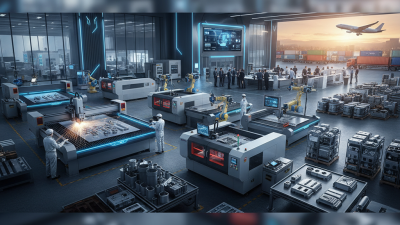
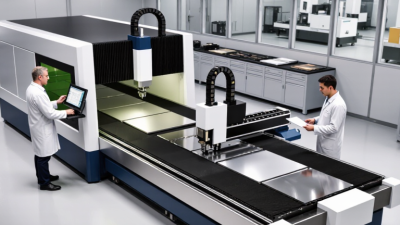
Laser Sources Compared: CO₂ at 10.6 μm vs Fiber at 1.06–1.08 μm

For global buyers, laser source selection should begin with the material, not the machine price. CO₂ lasers operate at 10.6 μm and suit acrylic, wood, leather, rubber, textiles, and many non-metallic sheets. Their visible cutting effect is often smooth on thicker organic materials. However, mirrors, lenses, and gas systems require regular inspection. Alignment can become a small but costly problem.

Fiber lasers work near 1.06–1.08 μm and are highly effective for stainless steel, carbon steel, aluminum, brass, and copper. Their shorter wavelength is absorbed efficiently by metals, supporting fast cutting and compact beam delivery. Fiber systems usually need less routine maintenance. Still, shiny metals demand correct settings, enclosure protection, and trained operation. A fiber source is not automatically better for every workshop. That assumption deserves testing.

Tips: Request sample cuts using your actual material and thickness. Check edge quality, piercing time, kerf width, and power consumption. Ask how the machine manages reflective materials and source cooling. Record results instead of trusting only catalog data. Operators should also inspect lenses, nozzles, and extraction filters regularly. Small maintenance habits protect consistency. During purchase reviews, include future materials, local technical support, spare-part access, and realistic production hours. A lower initial cost may become expensive when downtime, rejected parts, or unsuitable optics appear.

2026 Best Laser Machinery Buying Guide for Global Buyers – Laser Sources Compared: CO₂ at 10.6 μm vs Fiber at 1.06–1.08 μm
Evaluation Dimension CO₂ Laser
10.6 μm
Fiber Laser
1.06–1.08 μm
Typical laser medium Gas mixture containing carbon dioxide, nitrogen, helium, and other gases; commonly excited by RF or electrical discharge. Rare-earth-doped optical fiber, commonly ytterbium-doped fiber, pumped by semiconductor laser diodes.
Wavelength Approximately 10.6 μm, in the far-infrared region. Approximately 1.06–1.08 μm, in the near-infrared region.
Best material range Wood, acrylic, plastics, rubber, textiles, leather, paper, glass, stone, ceramics, and coated or painted materials. Carbon steel, stainless steel, galvanized steel, aluminum, brass, copper, titanium, and other electrically conductive metals.
Metal cutting capability Can cut some metals, but generally requires higher power, suitable optics, assist gas, and careful process control. Reflective metals can be challenging. Generally the preferred source for sheet-metal cutting because metals absorb near-infrared energy more effectively than they absorb 10.6 μm energy.
Nonmetal processing Strong performance for cutting, engraving, marking, and surface processing of most organic nonmetals. Limited for many transparent or organic materials; may cause unwanted heating, melting, or transmission depending on the material.
Typical electrical efficiency Usually about 10–15% wall-plug efficiency, depending on tube or RF source design and operating power. Commonly about 25–40% wall-plug efficiency, depending on source architecture, power level, and operating conditions.
Energy consumption Higher electrical input and cooling demand for comparable industrial output; chiller or dedicated cooling equipment is often required. Lower electrical consumption for many metal-cutting applications; air cooling may be possible at lower powers, while higher powers typically use a chiller.
Beam delivery Usually delivered through mirrors and a beam path; alignment and cleanliness of the optical path are important. Delivered through flexible optical fiber, reducing alignment work and simplifying machine integration.
Typical focused spot size Often approximately 100–300 μm, depending on lens focal length, beam quality, and optical configuration. Often approximately 20–75 μm for common cutting setups, depending on core diameter, optics, and beam mode.
Cutting speed on thin metal Generally slower and less energy-efficient than fiber for thin and medium-gauge metal sheets. Generally faster, especially on thin stainless steel, carbon steel, aluminum, brass, and copper, subject to power and process settings.
Engraving and marking Well suited to deep engraving and surface marking on wood, acrylic, leather, glass, rubber, and coated materials. Well suited to permanent marking, annealing, engraving, and color marking on metals and some engineered plastics.
Reflective-metal risk Copper, brass, aluminum, and other reflective metals may reflect significant energy toward the optical system, requiring suitable protection and process design. Modern systems include optical protection, but high-reflectivity metals still require appropriate source configuration, settings, and safety controls.
Maintenance requirements Regular cleaning and alignment of mirrors, lens maintenance, cooling-system service, and periodic replacement or servicing of the laser tube or RF components may be required. Generally lower routine maintenance; inspect the cutting head, protective window, nozzle, cooling system, and assist-gas circuit.
Expected source service life Sealed glass tubes commonly have shorter service lives than industrial RF systems; actual life varies significantly with duty cycle, cooling, and maintenance. Industrial fiber sources commonly provide long service life, often specified in the range of tens of thousands of operating hours, subject to thermal and electrical conditions.
Machine footprint Often larger because of the optical path, mirrors, gas-discharge source, and cooling equipment. Usually more compact because the source is fiber-delivered and requires fewer beam-path components.
Assist gases Air, nitrogen, or oxygen may be selected according to material, edge quality, and cutting thickness. Nitrogen, oxygen, or air may be selected according to material, thickness, productivity, and required edge condition.
Best fit for production Mixed-material workshops, signage, packaging, interior products, furniture, decorative items, and nonmetal fabrication. High-throughput metal fabrication, sheet-metal subcontracting, automotive parts, electrical cabinets, machinery components, and precision metal marking.
Buying priority for global buyers Prioritize material compatibility, tube or RF-source quality, beam-path stability, cooling capacity, replacement-part availability, and local technical support. Prioritize source power, cutting-head protection, autofocus performance, assist-gas control, cooling capacity, electrical compatibility, spare parts, and service coverage.
Note: Values are representative industry ranges for comparison only. Actual performance depends on laser power, optical configuration, material grade, thickness, assist gas, machine mechanics, software, duty cycle, and local operating conditions. Confirm final specifications through application testing before purchase.

Performance Metrics: Power, Speed, Kerf, Accuracy, and Duty Cycle

Power is not simply more is better. Match rated output to material thickness, reflectivity, and expected edge quality. A high-power source can cut quickly, yet excessive heat may widen the kerf and damage thin sheets. Record actual cutting power, not only the machine’s maximum rating. Test a 100 mm sample at several speeds. Keep the results.

Speed changes the heat balance. Too slow can leave a dark, rough edge. Too fast may cause incomplete penetration or small dross points. Kerf should be measured on the finished part with calipers or optical tools. A 0.15 mm difference can affect holes, tabs, and press-fit joints. This matters more than impressive catalog numbers.

Accuracy depends on mechanics, focus control, material flatness, and calibration. Check a square, a circle, and repeated holes across the worktable. Compare programmed dimensions with measured parts. Duty cycle is often overlooked. For production, ask how long the machine can run before thermal limits, cleaning, or alignment checks. Leave recovery time in the plan. I once treated speed as the main buying metric; that choice created rework and idle hours. A quieter, steadier machine may deliver more usable output. Specifications guide the shortlist, but controlled trials should decide it.

Safety Compliance: IEC 60825-1 Laser Classes 1–4 and ISO 11553-1

When buying laser machinery in 2026, safety classification must come before speed, power, or price. IEC 60825-1 defines laser Classes 1–4 according to wavelength, accessible emission, and exposure risk. Class 1 equipment is generally safe during normal operation, yet hidden beams may become hazardous during service. At common visible wavelengths, Class 2 relies partly on the natural blink response. Class 3R requires caution, while Class 3B and Class 4 can cause serious eye or skin injury. Class 4 may also ignite nearby materials.

The U.S. Occupational Safety and Health Administration’s Technical Manual identifies direct Class 3B and Class 4 exposure as immediate hazards. Its guidance also stresses beam enclosures, interlocks, warning signs, controlled access, and suitable protective eyewear. ISO 11553-1:2020 applies these principles to laser processing machines. Buyers should request documented tests for emergency stops, door switches, viewing windows, extraction systems, and residual radiation. A supplier’s declaration alone is not enough.

The U.S. Bureau of Labor Statistics recorded about 2.6 million nonfatal workplace injuries and illnesses in private industry during 2023. That broad figure does not measure laser incidents, but it shows why prevention deserves measurable controls. In factory audits, a clean exterior can hide weak maintenance procedures. This is easy to overlook. Ask who verifies the safety circuit after repairs, and keep the answer in writing.

IEC 60825-1 Laser Classes 1–4: Visible CW Reference Power Thresholds

The chart shows commonly used visible continuous-wave reference points in IEC 60825-1 safety training: Class 2 and Class 2M are limited to 1 mW, Class 3R to approximately 5 mW, and Class 3B extends to approximately 500 mW. Class 1 and Class 1M do not have one universal power value because their Accessible Emission Limits depend on wavelength, exposure time, and optical conditions. Class 4 exceeds Class 3B limits and may create hazards from direct or diffuse reflection, fire, and airborne contaminants. ISO 11553-1 applies these laser-safety principles to laser processing machines, including engineering controls, guarding, interlocks, and protective measures. Final compliance requires wavelength-specific calculations and the applicable standards.

Global Buying Checklist: TCO, CE, FDA, ISO 9001, Warranty, and Service

2026 Best Laser Machinery Buying Guide for Global Buyers

Buying laser machinery requires more than comparing the purchase price. Calculate total cost of ownership, including electricity, cooling, consumables, training, installation, maintenance, and downtime. A cheaper machine can become expensive after repeated service delays. Ask for realistic production samples, not only polished demonstration videos. Check cutting speed, edge quality, material thickness, and test conditions. Keep those records for fair comparisons.

Compliance documents need careful review. For European markets, request the applicable CE Declaration of Conformity and supporting technical documentation. For relevant American applications, verify FDA requirements, registration status, or clearance obligations. ISO 9001 shows a quality management system, but it does not prove machine safety or performance. Read the warranty line by line. Confirm coverage periods, excluded parts, response times, remote support, spare-part availability, and local technician access. Service promises should be written.

Tips: Ask for serial-numbered inspection records. Confirm electrical standards before shipment. Request a preventive-maintenance schedule. Calculate the cost of one lost production day. Do not guess.

A useful checklist still has limits. Certificates may expire, translations may be unclear, and service capacity can change after payment. Ask who actually handles support in your region. I would also request references from buyers with similar materials and working hours. One overlooked detail matters: verify whether software updates, calibration, and operator training are included or billed separately.