Leave Your Message
Choosing the best laser technology supplier requires more than comparing prices or browsing polished websites. A reliable decision begins with understanding your production needs, material types, safety requirements, and expected operating volume. The right partner should demonstrate practical experience, not merely repeat technical specifications. Ask how their systems perform during long production runs, under changing temperatures, and with demanding materials. Real evidence matters.
A professional supplier should provide clear information about laser source quality, cutting accuracy, software compatibility, maintenance, training, and spare parts. Their engineers should explain complex details in understandable language. They should also support compliance with applicable safety standards and provide documented testing. Look for case studies, customer references, service response times, and transparent warranty terms. A confident supplier will discuss limitations honestly. No machine fits every workshop.
Technology Laser solutions can vary significantly in beam stability, energy efficiency, control systems, and lifetime costs. A low purchase price may hide expensive downtime or difficult repairs. Request a live demonstration using samples similar to your own materials. Watch the operator adjust settings, inspect the finished edges, and explain quality checks. Take notes.
Still, supplier selection is not perfectly predictable. A successful reference from another industry may not match your process. Demonstrations can also look better than everyday production. Recheck every claim, preferably with independent technical advice. The strongest supplier is not always the largest one. It is the partner that combines verified performance, responsive support, honest communication, and a practical understanding of your long-term goals.
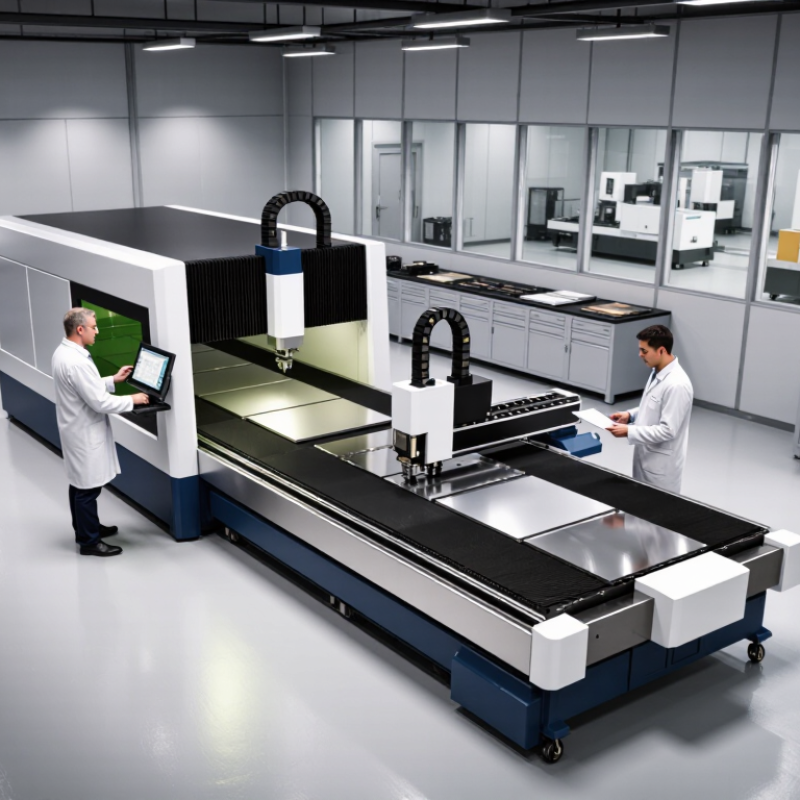
How to Choose the Best Laser Technology Supplier?
Define Laser Requirements by Wavelength, Power, Pulse Width, and M²
Choosing a laser supplier begins with the application, not the product catalog. Wavelength determines how efficiently a material absorbs light, so test data should match your actual substrate. Power needs equal careful attention. Average power affects throughput, while peak power controls energy delivered during each pulse. Confusing these values can produce weak results or unwanted heat.
Pulse width also changes the process. Nanosecond pulses may create more thermal influence, while shorter pulses can reduce heat-affected zones. The correct choice depends on material thickness, repetition rate, and scanning speed. M² describes beam quality and focusability. A lower M² usually produces a tighter, more predictable spot. Still, M² alone cannot guarantee good processing. Beam stability, pointing accuracy, and optical alignment matter too.
Tips: Ask for measured wavelength tolerance, average and peak power data, pulse-width limits, and M² results at the operating condition. Request test reports with calibration dates. Inspect the supplier’s integration support, maintenance response, and safety documentation. A clean specification sheet can still hide practical limitations.
Avoid defining requirements with vague terms like “high power” or “fine beam.” State the spot size, duty cycle, material, and acceptable result. If the supplier cannot explain how each specification was measured, pause the evaluation. I would also request a sample test before purchase. It may reveal that the planned pulse width is unsuitable, or that the beam changes after extended operation. That small doubt is useful.
Use the following application-oriented reference ranges to compare supplier specifications and request a configuration that matches your process, optics, material, and beam-delivery system.
| Application Profile | Typical Wavelength | Operating Mode | Typical Output Power | Pulse Width | Typical Repetition Rate | Recommended M² | Why These Parameters Matter | Supplier Verification Points |
|---|---|---|---|---|---|---|---|---|
| UV micromachining and polymer marking | 355 nm | Pulsed | 3–15 W average power | 10–40 ns | 20–200 kHz | ≤ 1.3 | Short-wavelength photons provide a small focused spot and are commonly selected for low-heat-input processing of plastics, coatings, glass, and electronics materials. | Request wavelength stability, pulse-to-pulse energy variation, pulse-width tolerance, UV optics compatibility, and measured beam quality at the work plane. |
| Visible inspection, alignment, and spectroscopy | 520–532 nm | Continuous-wave or pulsed | 10 mW–5 W | Continuous wave or 1–20 ns | Up to 100 MHz, depending on architecture | ≤ 1.5 | Visible wavelengths simplify alignment and are useful where detector response, fluorescence, or visual positioning is important. | Check wavelength drift over temperature, intensity noise, pointing stability, modulation bandwidth, and the required safety classification. |
| Precision metal marking and fine engraving | 1064 nm | Pulsed | 20–100 W average power | 10–200 ns | 20–500 kHz | ≤ 1.5 | Near-infrared pulsed sources are widely used for marking metals, coated parts, and some engineering plastics while controlling heat-affected zones. | Compare pulse-energy stability, peak power, spot-size range, galvo compatibility, thermal lensing, and performance at the intended scan speed. |
| High-speed cutting and welding of metals | 1030–1080 nm | Continuous-wave | 1–20 kW | Continuous wave | Not applicable | ≤ 1.3 | High-power near-infrared sources offer strong coupling to many metals and support focused processing with high energy density. | Verify power stability, back-reflection protection, delivery-cable limits, focus-shift behavior, cooling requirements, and availability of service diagnostics. |
| Thin-film ablation and semiconductor processing | 266–355 nm | Pulsed | 1–20 W average power | 1–20 ns | 10–500 kHz | ≤ 1.3 | UV radiation can improve absorption in selected films and reduce the thermal impact on adjacent layers when fluence is properly controlled. | Ask for long-term pulse-energy stability, ultraviolet transmission data for all optics, beam profile images, contamination limits, and maintenance intervals. |
| Micro-welding and low-heat joining | 515–532 nm | Pulsed | 10–200 W average power | 0.2–10 ms | 1–500 Hz | ≤ 1.8 | Green wavelengths can be advantageous for materials with stronger absorption in the visible range, particularly in small-feature joining and selective welding. | Confirm peak pulse power, temporal pulse shape, energy repeatability, trigger jitter, process-window data, and compatibility with the focusing head. |
| Ultrafast cold ablation and delicate material processing | 515–1030 nm | Ultrashort pulsed | 5–100 W average power | 100 fs–10 ps | 100 kHz–10 MHz | ≤ 1.5 | Femtosecond and picosecond pulses can limit heat diffusion and are selected for high-precision processing of glass, brittle materials, medical components, and microstructures. | Request autocorrelator or equivalent pulse-duration verification, pulse-energy range, pedestal contrast, timing stability, compressor efficiency, and beam-pointing data. |
| Fiber sensing and optical communications testing | 1310–1550 nm | Continuous-wave or modulated | 1 mW–1 W | Continuous wave or nanosecond modulation | DC to several GHz, system dependent | ≤ 1.5 | These near-infrared bands align with important fiber transmission windows and require stable optical power and controlled modulation characteristics. | Check linewidth, relative intensity noise, wavelength accuracy, modulation response, connector type, optical isolation, and output-power monitoring. |
| Laser cleaning and surface preparation | 1030–1070 nm | Pulsed | 50–500 W average power | 20–500 ns | 20–2000 kHz | ≤ 1.8 | Short pulses can remove oxides, coatings, or contaminants when fluence, spot overlap, and scanning speed are matched to the substrate. | Compare pulse-energy range, beam-profile uniformity, scan-field performance, contamination protection, cooling capacity, and substrate-damage test results. |
Note: The values shown are representative engineering ranges rather than universal specifications. Final requirements should be confirmed through application testing, optical-design calculations, safety analysis, and a written supplier datasheet.