Leave Your Message
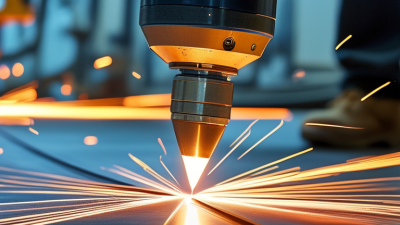
Choosing a laser machine is rarely as simple as comparing wattage and price. This 2026 buying guide examines Laser Surface Finishing equipment through practical, measurable criteria. It focuses on cleaning, polishing, texturing, oxide removal, and controlled surface preparation across metals and selected industrial materials. Each application demands different energy delivery, beam control, and process stability.
Real purchasing decisions often begin with a sample part. A stainless-steel fitting may need a uniform satin finish, while an aluminum component may require lower heat input. Watch the surface closely. Discoloration, uneven texture, or edge rounding can reveal poor parameter control. Important specifications include laser source type, pulse duration, power range, spot size, scanning speed, working area, extraction design, and automation compatibility. Operators should also review maintenance access, software usability, training, warranty terms, and documented safety features.
No machine wins every job. Experienced suppliers should provide test results, process limitations, and clear operating guidance rather than vague performance promises. Ask for before-and-after samples, repeatability data, and realistic cycle times. Independent verification remains valuable, especially when finishing affects appearance, adhesion, dimensional accuracy, or later coating performance. Some advertised results may depend heavily on material condition and operator skill. That matters.
This guide also considers total ownership cost, including consumables, maintenance, energy use, installation, and staff training. A cheaper system can become expensive when it needs frequent adjustment. Conversely, advanced automation may be unnecessary for small production volumes. Review your parts, workflow, safety responsibilities, and future capacity before choosing. The best purchase is not the most powerful machine. It is the system that produces reliable results under your actual working conditions.
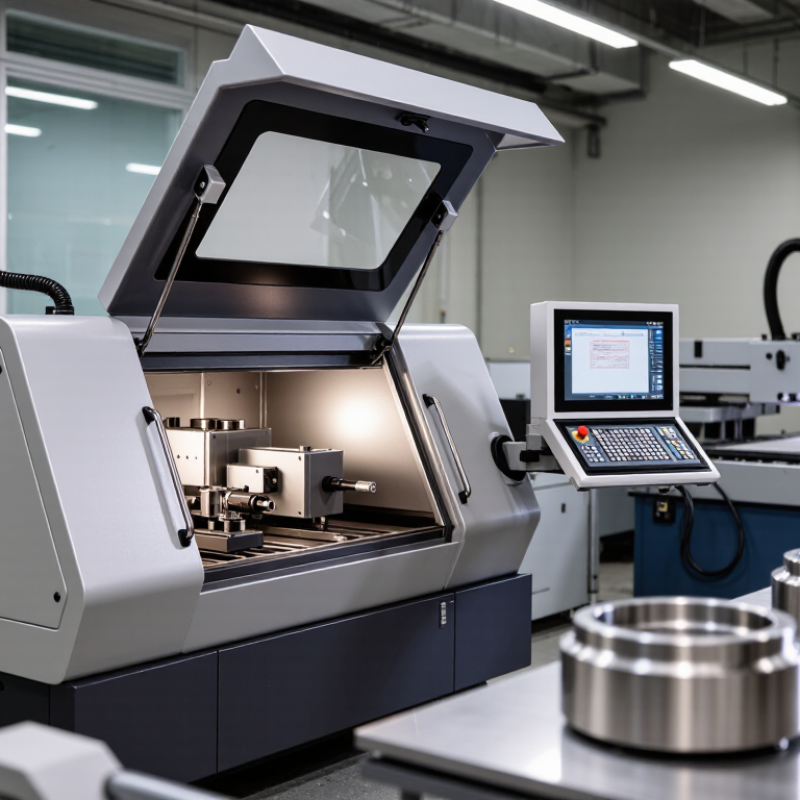
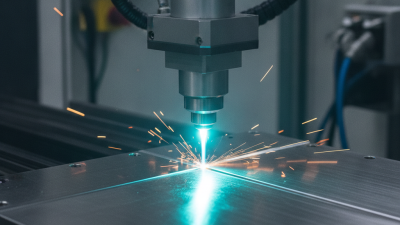
A laser surface finishing machine uses concentrated light to clean, texture, polish, or prepare a material surface. It directs controlled laser energy across metal, ceramic, or selected engineered components. The beam can remove rust, oxide layers, paint residue, and microscopic contaminants without abrasive contact. A scanner moves the beam in programmed lines, while sensors and software regulate energy delivery. Operators can adjust pulse width, power, speed, frequency, and beam overlap. These settings influence surface roughness, color, heat exposure, and processing time.
In practical use, the machine needs more than a powerful laser source. It may include focusing optics, extraction equipment, protective enclosures, cooling systems, and a stable worktable. Technicians often inspect the surface before and after treatment with magnification or roughness measurements. A darkened edge may show excessive heat. Uneven passes can leave visible bands. That happened during an early trial because the scan overlap was too low. The result required slower settings and another test panel. Material thickness, reflectivity, and coating type also affect performance. Proper ventilation, interlocks, eye protection, and trained operation remain essential. Buyers should request test data on their actual materials, not rely only on catalog figures. Speed claims can look impressive. Real production results may differ.
| Machine Type or Buying Dimension | What It Is | Typical Technical Range | Suitable Materials and Applications | Key Buying Considerations |
|---|---|---|---|---|
| Laser Cleaning Machines | Systems that remove rust, oxides, oil, paint, coatings, carbon deposits, and other contaminants through controlled laser ablation or thermal desorption. | Pulsed power: approximately 20–500 W Continuous-wave power: approximately 1–6 kW Common wavelengths: 1,030–1,080 nm |
Steel, stainless steel, aluminum, copper, molds, weld-preparation areas, historical metal surfaces, and industrial maintenance components. | Choose pulsed systems for precise, low-heat treatment and delicate surfaces. Choose higher-power continuous-wave systems for large-area industrial cleaning. |
| Laser Polishing Machines | Equipment that selectively melts or smooths a thin surface layer to reduce roughness, remove microscopic peaks, or improve the appearance of machined parts. | Typical optical power: approximately 100–1,000 W Spot size: commonly 0.1–2.0 mm Process speed: application-dependent |
Metal tooling, molds, additively manufactured metal parts, precision components, and surfaces requiring reduced roughness. | Verify the achievable roughness value on the actual material. Results depend on alloy, initial roughness, geometry, scan strategy, and post-processing requirements. |
| Laser Texturing Machines | Systems that create controlled microstructures, patterns, grooves, dimples, or functional textures on a surface. | Pulse duration: nanosecond to ultrashort-pulse ranges Typical wavelengths: 355 nm, 532 nm, or 1,030–1,080 nm Feature size: from several micrometers upward |
Injection molds, friction surfaces, sealing components, medical parts, optical components, and surfaces requiring controlled wettability or lubrication. | Evaluate positioning accuracy, beam quality, software capability, pattern repeatability, and the machine’s ability to process curved or three-dimensional parts. |
| Laser Cladding and Surface Alloying Machines | Systems that deposit or fuse powder or wire onto a substrate to rebuild worn areas, improve wear resistance, or add corrosion-resistant material. | Typical power: approximately 1–6 kW Deposition rate: commonly about 0.5–10 kg/h, depending on process conditions Shielding gas: usually argon or another qualified inert gas |
Machine tools, shafts, valves, turbine components, mining parts, agricultural components, and high-wear metal surfaces. | Check powder or wire delivery stability, dilution control, heat input, layer thickness, closed-loop monitoring, and compatibility with the base alloy. |
| Laser Marking and Surface Micro-Finishing Machines | Galvanometer- or motion-based systems used for permanent marking, micro-engraving, selective coating removal, and fine surface modification. | Fiber laser: commonly 20–100 W at approximately 1,030–1,080 nm UV laser: commonly 3–20 W at 355 nm CO₂ laser: commonly 20–150 W at 10.6 µm |
Metals, plastics, coated materials, ceramics, glass, electronics, tools, and traceability components. | Select the wavelength according to absorption, heat sensitivity, contrast, and material type. UV is often preferred for low-heat processing of sensitive materials. |
| Laser Source Type | The laser technology determines wavelength, pulse behavior, efficiency, maintenance needs, and the materials that can be processed effectively. | Fiber: approximately 1,030–1,080 nm CO₂: approximately 9.3–10.6 µm UV: commonly 355 nm Green: commonly 515–532 nm |
Fiber lasers are widely used for metals; CO₂ lasers are effective for many organic materials; UV and green lasers are useful for sensitive, reflective, or specialized materials. | Do not select by wattage alone. Compare wavelength absorption, pulse width, beam quality, spot size, duty cycle, and the required surface result. |
| Pulse Duration | The time span of each laser pulse, which influences heat input, material removal mechanism, edge quality, and the risk of thermal damage. | Continuous wave: no individual pulses Nanosecond: approximately 1–1,000 ns Picosecond: approximately 1–1,000 ps Femtosecond: below 1 ps |
Nanosecond systems suit general cleaning and marking. Picosecond and femtosecond systems are used when very low heat-affected zones or high-precision microprocessing are required. | Shorter pulses can improve precision but generally increase system cost and may reduce productivity for large-area work. Match pulse duration to the required finish. |
| Average Laser Power | The average optical output available during operation. It affects productivity but does not alone determine cleaning quality or surface finish. | Precision processing: approximately 20–200 W General industrial cleaning: approximately 200–1,000 W Large-area cleaning or cladding: approximately 1–6 kW |
Lower powers are suitable for detailed work and sensitive surfaces; higher powers are used for larger areas, thicker contamination, or material deposition. | Compare power with pulse energy, repetition rate, scanning width, absorption, and process speed. Excessive power can discolor, melt, or distort the substrate. |
| Scanning and Motion System | The optical scanner, linear axis, rotary axis, or robotic platform that controls the laser path across the workpiece. | Galvanometer scan fields: commonly 70 × 70 mm to 300 × 300 mm Positioning accuracy: machine-dependent Rotary and multi-axis options available |
Flat parts, cylindrical components, large structures, molds, dies, and complex three-dimensional workpieces. | Confirm field size, focus variation, repeatability, rotary capacity, axis travel, robot reach, and whether automatic focus or 3D path compensation is included. |
| Beam Quality and Spot Size | Beam quality affects focusability, energy density, edge definition, and the consistency of the processed surface. | Common focused spot sizes: approximately 20–500 µm for precision work Approximately 0.5–5 mm for high-throughput cleaning or cladding |
Small spots support detailed texturing and marking; larger spots improve coverage and productivity for broad surface treatment. | Ask for measured spot-size data at the working distance, not only nominal specifications. Check whether the spot remains uniform across the full scan field. |
| Process Gas and Fume Extraction | Supporting systems that protect the process, optics, operator, and workplace from fumes, particles, oxidation, or unwanted contamination. | Common gases: compressed air, nitrogen, argon, or application-specific mixtures Extraction: local capture with suitable filtration |
Essential for coating removal, paint stripping, laser cleaning, cladding, and processes that generate metal or polymer fumes. | Verify gas consumption, filtration efficiency, filter replacement cost, noise level, ducting requirements, and compatibility with the material being processed. |
| Automation and Software | Control functions used to create repeatable scan paths, manage recipes, monitor parameters, and integrate the machine with production equipment. | Typical features: CAD import, recipe storage, parameter libraries, autofocus, vision alignment, barcode or data input, and production interfaces | High-volume production, repeatable maintenance work, complex geometries, and applications requiring documented process control. | Prioritize simple parameter adjustment, access control, data logging, remote diagnostics, and compatibility with existing PLC, MES, or robotic systems. |
| Safety and Enclosure | Protective features that control access to laser radiation, fumes, moving components, reflections, and process hazards. | Common features: enclosed Class 1 operation, interlocked doors, emergency stops, viewing windows, warning indicators, and extraction interfaces | All industrial laser surface finishing applications, especially those using high-power infrared or ultraviolet sources. | Require a documented risk assessment, appropriate laser classification, interlocks, protective eyewear where applicable, machine guarding, and compliance with local regulations. |
| Work Envelope and Part Handling | The maximum part size, weight, and geometry that the machine can process while maintaining the required focal position and accuracy. | Options may include fixed tables, rotary fixtures, conveyor systems, robotic cells, and multi-axis positioners | Small precision components, large fabricated structures, cylindrical parts, molds, dies, and irregular three-dimensional workpieces. | Measure the largest real workpiece, including fixtures and extraction clearance. Check load capacity, access to recessed areas, and setup time between parts. |
| Total Cost of Ownership | The complete cost of purchasing, operating, maintaining, and supporting the machine throughout its service life. | Cost factors include laser source, optics, motion system, extraction, gas, electricity, consumables, calibration, training, and service | Relevant to every purchase, particularly when comparing low-cost manual systems with automated production cells. | Request a full operating-cost estimate, expected maintenance schedule, spare-parts availability, warranty terms, training scope, and service response arrangements. |