Laser Surface Engineering is transforming industries by enhancing the performance of materials. According to a report by Markets and Markets, the global market for laser surface treatment is expected to reach $5.9 billion by 2025. This growth underscores the technology's significance in sectors such as aerospace, automotive, and medical devices. Experts emphasize the importance of this discipline in improving durability, wear resistance, and overall performance.
Dr. Emily Chen, a leading authority in Laser Surface Engineering, states, “The future of material performance lies in laser treatments.” Her insights reflect the profound impact of laser technologies on various applications. From enhancing corrosion resistance in marine environments to increasing fatigue life in automotive components, the versatility of laser surface engineering is remarkable. Despite its advantages, challenges remain in standardization and cost management.
As industries adapt to new demands, the application of Laser Surface Engineering continues to evolve. The balance between innovation and practical implementation can sometimes lead to unforeseen difficulties. Acknowledging the limitations alongside the benefits is essential for achieving optimal results. It is clear that the journey of Laser Surface Engineering is filled with potential and complexity.

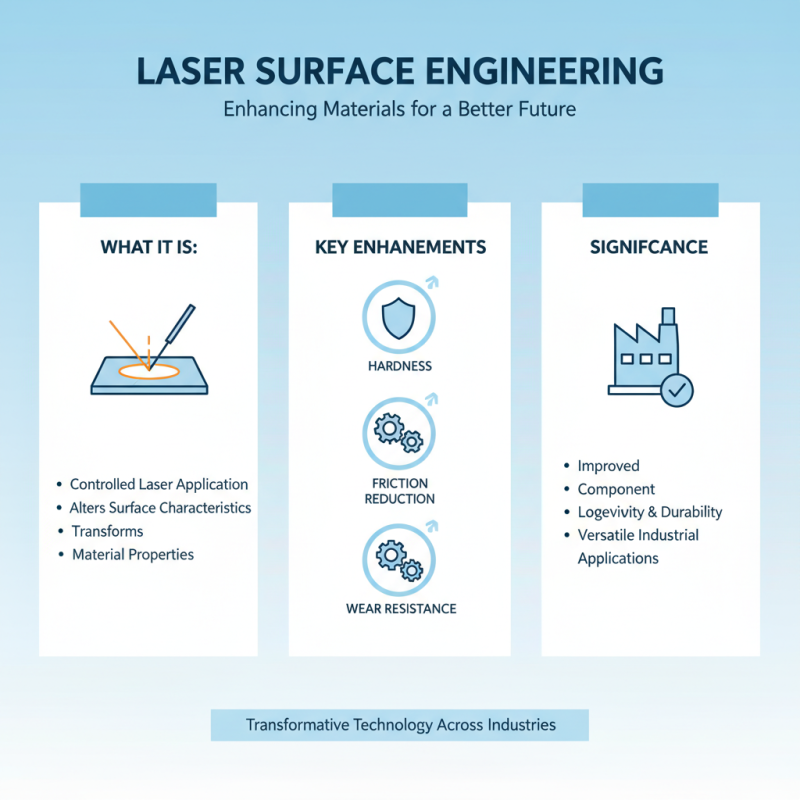
Laser surface engineering has emerged as a transformative technology in various industries. This technique enhances the physical properties of materials through controlled laser application. The process alters surface characteristics such as hardness, friction, and wear resistance. These enhancements lead to improved performance and longevity of components.
The significance of laser surface engineering lies in its ability to extend the lifespan of critical parts. Enhancing durability can reduce maintenance costs and minimize downtime. However, the process is not without its challenges. Mastering laser settings and understanding material responses require expertise. The operator’s knowledge plays a crucial role in achieving desired outcomes. Variations in laser intensity can yield different results, sometimes leading to unforeseen surface defects or inconsistencies.
It’s essential to strike a balance between innovation and reliability. While lasers can produce remarkable results, improper applications can lead to failures. Engineers must continuously refine their techniques to ensure consistency and quality. As laser surface engineering evolves, its potential to boost performance across various sectors is immense. Yet, reflection on past experiences can guide future advancements.
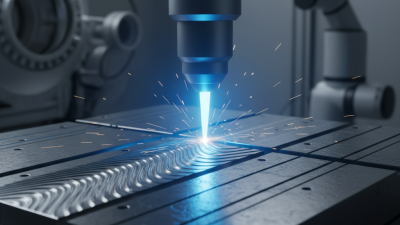
Laser surface engineering offers significant benefits across various industries. This innovative technique improves the performance of components through enhanced durability and resistance to wear. For example, laser treatments can modify the surface microstructure, leading to improvements in hardness and fatigue resistance. These changes help materials withstand harsh environments, thus prolonging their lifespan.
In the automotive sector, laser surface treatment can enhance engine parts, improving efficiency and reducing fuel consumption. Aerospace applications also benefit from this technology, contributing to lighter, stronger aircraft components.
However, the complexity of controlling laser parameters can lead to uneven surface properties. Achieving the desired outcomes requires significant expertise and precision. Despite these challenges, the advantages of laser surface engineering in performance enhancement are undeniable. The potential for reduced maintenance and increased efficiency makes it a compelling choice for industries aiming for progress.
In aerospace, laser surface engineering is revolutionizing component performance. This innovative technology enhances the surface properties of metallic components, critical in the aerospace industry. Research shows that up to 80% of component failures are related to surface properties. By utilizing laser treatment, manufacturers can significantly increase wear resistance and fatigue life. For example, applying laser shock peening to turbine blades can improve fatigue resistance by up to 50%.
Furthermore, laser surface treatments improve corrosion resistance, essential for components exposed to harsh environments. A recent study indicates that these treatments can extend component life by approximately 30%. This not only leads to reduced maintenance costs but also enhances overall safety. Data suggests that optimized surface characteristics can improve the efficiency of critical components, resulting in reduced fuel consumption.
However, the implementation of laser surface engineering is not without challenges. The high initial investment for equipment and training raises costs. There is also a need for precise control in the treatment process. Inconsistencies or improper application could lead to suboptimal results or failures. Continuous research is essential to refine these techniques, ensuring reliable outcomes in the demanding aerospace field.
| Application | Description | Benefits | Typical Components |
|---|---|---|---|
| Repair of Turbine Blades | Laser repair can restore the geometry and performance of damaged turbine blades. | Extends component life, reduces waste | Gas turbine engines |
| Surface Hardening | Laser hardening improves wear resistance of components. | Enhances durability, reduces friction | Gears, shafts |
| Coating Removal | Lasers can effectively and precisely remove coatings from surfaces. | Non-destructive, minimizes damage | Aircraft components |
| Additive Manufacturing | Using lasers to add material layer by layer to create complex shapes. | Reduces waste, enables design flexibility | Structural components |
| Surface Texturing | Texturing surfaces to enhance mechanical properties and aesthetics. | Improves adhesion, reduces wear | Blade surfaces, seals |
| Weld Seam Inspection | Lasers can help inspect the quality of weld seams in components. | Ensures integrity, prevents failures | Welded components |
| Fatigue Resistance Enhancement | Laser treatments can reduce residual stresses in components. | Increases lifespan, reduces failure rates | Structural frames |
| Thermal Barrier Coatings | Applying thermal barrier coatings for high-temperature applications. | Enhances thermal protection, improves efficiency | Combustion components |
| Corrosion Resistance Improvement | Laser treatments can enhance the corrosion resistance of metal surfaces. | Extends life, reduces maintenance | Engine components |
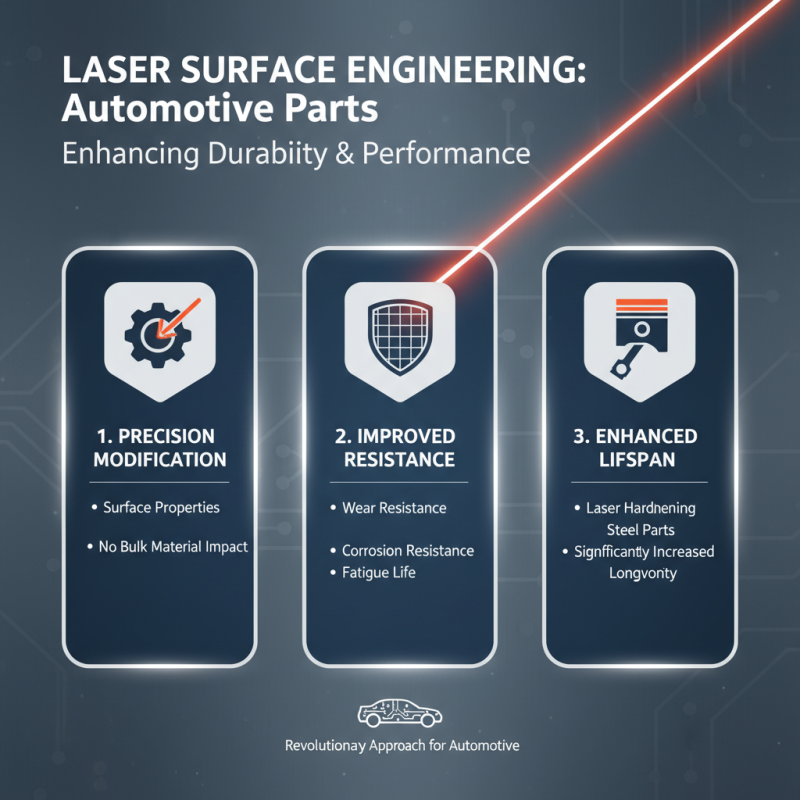
Laser surface engineering has become a revolutionary approach in enhancing the durability and performance of automotive parts. By using lasers, engineers can modify the surface properties of components without affecting their bulk material. This precise treatment can improve wear resistance, corrosion resistance, and fatigue life. For instance, laser hardening creates a hardened layer on steel parts, significantly increasing their lifespan.
Automotive manufacturers are now exploring various laser techniques. These include laser texturing and alloying. Laser texturing can create micro-patterns that reduce friction and improve lubrication. It can lead to smoother operations in engines and transmissions. Additionally, when laser alloying is employed, elements are integrated into the surface. This results in superior thermal and mechanical properties.
Despite its advantages, some challenges remain. The cost of laser systems can be high for small manufacturers. Moreover, mastering the technology requires specialized training. Engineers must also consider potential imperfections that can arise during processes. This includes uneven surface treatment if parameters are not carefully controlled. As the automotive industry evolves, continuous innovation in laser surface engineering will play a crucial role in achieving enhanced performance.
Laser surface engineering (LSE) has emerged as a game-changer in the medical device industry. By using laser technology, manufacturers can enhance the performance and longevity of medical tools. For instance, lasers can create micro-patterns or textures on surfaces, improving biocompatibility. This is vital for implants that come into contact with human tissue, as a smoother surface can reduce rejection rates.
Another significant application is in the field of sterilization. Laser treatments can effectively remove contaminants without harming the underlying material. This process is crucial for surgical instruments, ensuring that they meet strict hygiene standards. However, while LSE offers great benefits, it is not without its challenges. The precision required for successful application demands advanced technology and skilled professionals.
Moreover, the costs associated with laser technologies can be daunting for smaller manufacturers. Many struggle to invest in cutting-edge equipment. This raises questions about accessibility and equity in advanced medical technologies. As the field evolves, continuous innovation and research must address these shortcomings. Balancing performance enhancements with practical challenges will be essential for the future of LSE in medical devices.