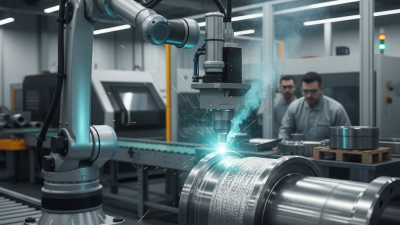
Choosing the right Laser Cladding machine in 2026 requires more than comparing laser power or catalog prices. Global buyers face different materials, coating goals, production volumes, and service conditions. A machine built for repairing turbine blades may perform poorly on large mining rollers. The best choice depends on the application.
This guide introduces the leading Laser Cladding machine types for international purchasing teams. It examines powder-fed systems, wire-fed systems, coaxial heads, lateral-feed designs, and hybrid platforms. Each type offers practical strengths. Powder systems support precise coatings and complex geometries. Wire systems can improve material efficiency for larger surfaces. Hybrid machines may combine cladding with machining, reducing handling time.
Real workshop details matter. A stable melt pool, clean powder delivery, and accurate motion control affect final coating quality. So do operator training, spare-part access, ventilation, and remote technical support. Buyers should request test coupons, process data, warranty terms, and documented case studies before signing contracts. Supplier claims deserve verification.
No single machine wins.
This overview uses engineering criteria and purchasing experience to support informed comparisons. It considers deposition rate, dilution control, repair accuracy, material compatibility, maintenance demands, and total ownership cost. However, some conclusions remain application-dependent. A supplier’s impressive demonstration may not represent your alloy, geometry, or production schedule. That limitation deserves attention. By comparing machine architectures carefully, buyers can reduce technical risk and select equipment that remains reliable beyond the showroom.
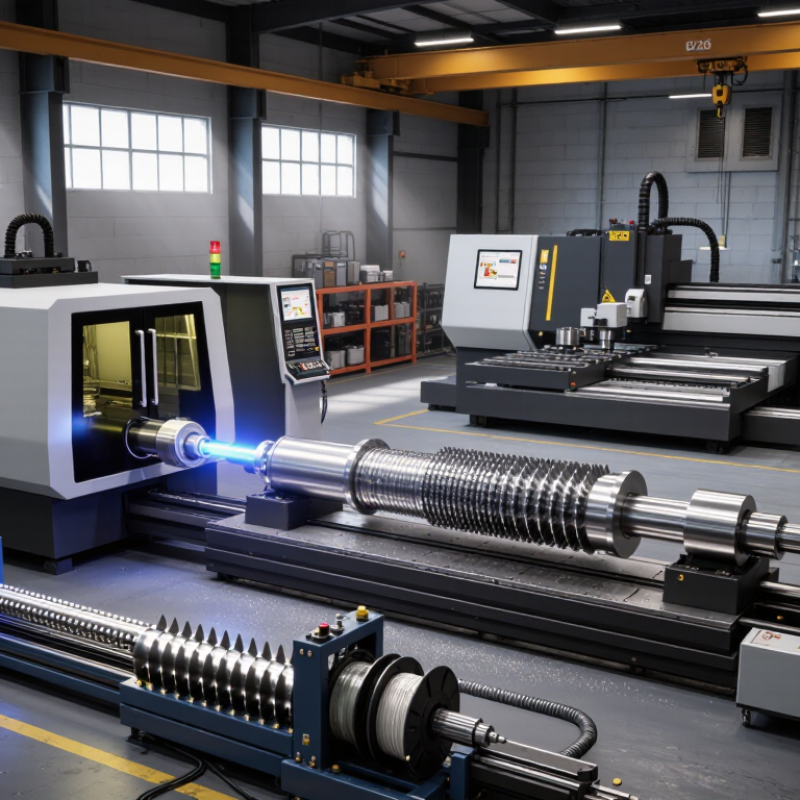
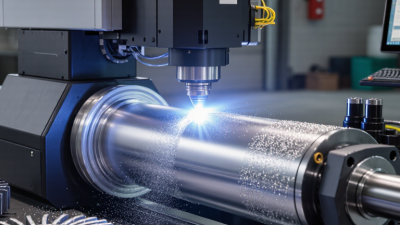
Laser cladding is a surface repair and protection process using concentrated laser energy. The beam melts a thin layer of the substrate and added material at the same time. Powder or wire enters the melt pool through a controlled feeding system. After cooling, it forms a dense, metallurgically bonded coating.
The process looks simple. It is not. A powder-fed machine suits detailed repairs and complex shapes. A wire-fed machine can reduce material waste during larger builds. Hybrid systems combine cladding with machining or automated motion control.
The machine must coordinate laser power, travel speed, material flow, and shielding gas. Small changes can alter dilution, hardness, and coating thickness.
In practical work, operators watch the melt pool and inspect each cladding track. Overlapping tracks should appear even, without visible pores, cracks, or excessive spatter. Preheating may reduce thermal stress on some components.
Material compatibility still requires testing. A strong-looking surface can hide weak bonding beneath it. Reliable evaluation includes dimensional measurement, hardness testing, visual inspection, and, when necessary, cross-sectional analysis. Process records also help identify why one repair performs better than another.
Main Types of Laser Cladding Machines in 2026
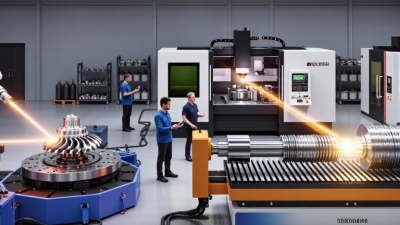
Laser cladding machines in 2026 mainly differ by material delivery, beam design, and motion platform. Powder-fed systems remain widely used for repairing turbine edges, hydraulic shafts, and complex molds. They offer precise alloy changes and support thin deposition layers. However, powder recovery can be imperfect, especially around deep corners.
Wire-fed machines use metal wire instead of powder. They usually achieve higher material efficiency and create less airborne waste. These systems suit large shafts, rails, pressure components, and other broad surfaces. Wire feeding needs stable tension. Small feeding errors can produce uneven bead height.
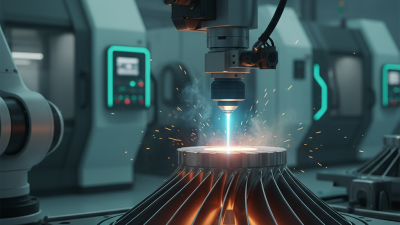
Beam delivery also separates machine types. Coaxial systems place powder or wire around the laser path, allowing multi-directional deposition. Off-axis systems are simpler and often easier to adjust. Robotic laser cladding cells handle curved parts and large workpieces. CNC machines provide tighter positioning for repeatable repairs. Some hybrid systems combine cladding with milling or turning in one enclosure.
Closed-loop machines are becoming more practical in 2026. Cameras, thermal sensors, and height monitoring can adjust laser power or travel speed during production. This improves consistency when surface conditions change. Yet sensors can misread reflective metals. Calibration still demands skilled technicians.
Choosing a machine depends on repair size, alloy form, geometry, and production volume. There is no universal best type. A compact powder system may outperform a large robotic cell for small valve repairs. Real shop conditions matter more than impressive specifications.
| Machine Type | Material Feed | Typical Laser Power Range | Typical Deposition Rate | Dimensional Control | Best-Fit Applications | Main Advantages | Key Limitations |
|---|---|---|---|---|---|---|---|
| Coaxial Powder-Fed Laser Cladding Machine | Metal powder delivered through a nozzle around the laser beam | 1–10 kW for most repair and surface-engineering work | Approximately 0.1–5 kg/h, depending on powder, power, spot size, and travel speed | High; suitable for controlled beads and localized repairs | Shafts, hydraulic rods, tooling, turbine components, molds, and wear-resistant surfaces | Omnidirectional deposition, good access around complex geometries, low material waste, and precise heat input | Powder handling is more complex, and powder utilization can vary with nozzle alignment and process settings |
| Off-Axis Powder-Fed Laser Cladding Machine | Metal powder injected from a side-mounted nozzle | 1–8 kW | Approximately 0.1–4 kg/h | High on accessible surfaces; dependent on nozzle angle and workpiece geometry | Large flat areas, external cylindrical surfaces, selected repair zones, and applications requiring easy nozzle access | Simple nozzle design, flexible powder delivery, and convenient process observation | Less suitable for fully three-dimensional paths and areas where the powder nozzle cannot maintain a consistent angle |
| Wire-Fed Laser Cladding Machine | Solid metal wire fed into the laser-generated melt pool | 2–20 kW for medium- to high-deposition applications | Approximately 0.5–10 kg/h; higher rates are possible with suitable wire and process conditions | Medium to high; bead geometry depends strongly on wire feed and heat control | Large components, heavy-duty rebuilding, dimensional restoration, and applications prioritizing material utilization | High material utilization, cleaner handling than powder, lower airborne-particle exposure, and broad material availability | Wire feeding is sensitive to alignment, and the process generally has less freedom than coaxial powder deposition on complex surfaces |
| High-Speed Laser Cladding Machine | Usually fine metal powder, deposited with a shallow melt pool and high travel speed | 1–6 kW | Commonly about 0.5–3 kg/h, with higher productivity possible for suitable coatings | Very high for thin, uniform coatings; often requires finishing for tight final dimensions | Wear-resistant coatings, corrosion protection, sealing surfaces, hydraulic components, and high-volume cylindrical parts | High travel speed, low dilution, thin coating capability, and reduced heat input compared with conventional cladding | Requires precise process control, stable powder delivery, accurate part preparation, and compatible substrate geometry |
| Laser Metal Deposition Machine for Additive Manufacturing | Powder or wire deposited layer by layer from a programmed toolpath | 1–20 kW, selected according to component size and deposition rate | Approximately 0.2–10 kg/h, depending on feedstock and system configuration | High for near-net-shape production; machining is commonly required for final tolerances | Large metal parts, near-net-shape production, complex repairs, feature addition, and hybrid manufacturing | Can build or restore significant volumes, supports multiple toolpath strategies, and integrates with multi-axis motion systems | Surface finish and final accuracy are normally lower than finished machining, and programming and thermal management are important |
| Robotic Multi-Axis Laser Cladding Cell | Powder or wire, mounted on a robotic arm or multi-axis positioner | 1–10 kW in common repair and coating configurations | Approximately 0.1–6 kg/h, depending on the deposition head and process | High geometric flexibility; accuracy depends on robot calibration, positioners, and process control | Large or irregular components, dies, molds, aerospace structures, energy parts, and multi-surface repairs | Large working envelope, flexible tool orientation, automation potential, and ability to reach difficult surfaces | Robot path accuracy is generally lower than that of a rigid precision machine tool, and programming and calibration require skilled personnel |
| CNC Laser Cladding Machine Tool | Typically powder; wire configurations are also available | 1–10 kW | Approximately 0.1–5 kg/h | High and repeatable when the workpiece fits the machine envelope | Precision repair, cylindrical parts, molds, tooling, and production environments requiring repeatable positioning | Rigid structure, predictable motion, strong process repeatability, and convenient integration with machining operations | Working envelope and access angles are limited by the machine design; very large parts may require specialized equipment |
| Rotary Laser Cladding Machine | Powder or wire applied while the workpiece rotates on a chuck or positioner | 1–8 kW | Approximately 0.1–5 kg/h | High for rotationally symmetrical components | Shafts, rolls, cylinders, rings, sleeves, valve components, and other round parts | Efficient coverage of circumferential surfaces, stable process geometry, and simplified programming for round components | Primarily designed for rotational parts and may require additional axes for shoulders, grooves, or complex features |
| Hybrid Laser Cladding and CNC Machining System | Powder or wire for deposition, followed by integrated cutting tools for machining | 1–10 kW for the laser process | Approximately 0.1–5 kg/h for deposition, depending on the selected feedstock | High after in-machine finishing; deposition accuracy and machining accuracy are separate considerations | High-value repairs, mold restoration, aerospace parts, precision tooling, and reduced-setup manufacturing | Combines material addition and finishing in one platform, reducing handling and improving datum consistency | Higher equipment cost, more complex process planning, and the need to coordinate laser, motion, and machining parameters |
Note: Performance ranges are representative industry values rather than guaranteed specifications. Actual results depend on laser wavelength and power, feedstock material, particle or wire size, substrate condition, nozzle design, shielding gas, geometry, travel speed, and process control.
Modern laser cladding systems now serve repair, wear protection, and near-net-shape manufacturing. Powder-fed machines suit complex surfaces and fine material control. Wire-fed systems offer higher deposition efficiency and lower powder waste. Robotic cells reach long shafts, turbine parts, and irregular tooling. Fixed-axis machines remain practical for repeatable cylindrical work. Each type has limits.
Key technologies include coaxial powder delivery, closed-loop melt-pool monitoring, and multi-axis motion. Melt-pool cameras can detect brightness changes before defects become visible. Laser power, travel speed, and powder flow must work together. ISO/ASTM 52900 provides common additive manufacturing terminology and supports clearer technical specifications. The Wohlers Report 2024 valued the global additive manufacturing industry at 20.035 billion dollars in 2023, with 13.5% growth. That wider expansion is increasing demand for controllable deposition systems.
Energy efficiency also matters. A 2024 laser cladding market assessment projected annual growth near 9%, but forecasts vary by region and application. Buyers should examine test coupons, not only brochures. A smooth bead can still hide porosity. Not always. Operators should request hardness maps, dilution measurements, and cross-section images from production-like trials. Powder recovery systems can reduce material loss, while offline programming limits setup time. Yet automation is not automatically reliable. Poor calibration, reflective surfaces, and unstable shielding gas can still produce inconsistent layers. Small details matter.
Typical cladding layer thickness ranges by modern laser cladding system type
Powder-fed coaxial systems are widely used for precise repairs and complex geometries, while wire-fed systems generally support higher material utilization and larger build volumes. High-speed laser cladding is optimized for thin protective layers and reduced heat input. Laser-arc hybrid systems are suited to high deposition rates and heavy-duty surface restoration. The ranges shown are generalized industry-typical process values; actual results depend on laser power, material, substrate, powder or wire feed rate, scan speed, and process control.
How to Compare Laser Cladding Machines for Global Applications
Global buyers should compare laser cladding machines by application, not catalog power alone. Repairing a turbine edge requires different control than building a thick wear-resistant layer. Start with laser power, spot size, deposition rate, powder efficiency, and heat input. A high-power source can look impressive, but it may distort thin components. That detail is easy to miss.
Wohlers Report 2024 valued the global additive manufacturing industry at about 20 billion dollars in 2023, with 13.5% annual growth. This expansion increases demand for reliable directed-energy systems. Buyers should examine the machine’s powder feeder stability, multi-axis accuracy, chamber size, and cooling design. Ask for measured results, not only laboratory claims. ASTM F3187 also supports using documented process controls for directed energy deposition.
Service capability matters across borders. Check training, spare-part access, remote diagnostics, electrical compatibility, and operator safety documentation. A machine with excellent deposition data may still become expensive if maintenance takes weeks. I would compare total ownership cost over five years, including powder waste, filters, energy, and calibration. The comparison may feel incomplete without production trials. Request test coupons using your alloy, geometry, and surface tolerance. Results can change sharply between flat plates and narrow internal surfaces. Small oversights matter.
Selection should start with the material, not the machine’s advertised power. Powder-fed laser cladding suits complex repairs, curved surfaces, and controlled coating thickness. Wire-fed systems can reduce consumable waste and work well on larger shafts, rollers, and structural parts. Laser remelting offers shallow surface improvement, but it is not a substitute for thick deposition.
The 2024 Wohlers Report valued the global additive manufacturing industry at about US$20.0 billion in 2023, with continued demand for metal processing and industrial repair. This figure covers more than laser cladding, so buyers should avoid treating it as a direct market forecast. In field trials, nickel alloys often need tight heat control, while steel components may tolerate faster deposition. Check dilution, hardness, porosity, and bond strength after testing. A shiny surface can still hide weak adhesion.
Tips
Request sample coupons made from your actual alloy. Compare powder recovery, wire feeding stability, laser spot size, and operator training. For a small repair shop, a compact powder system may control cash flow better. Large production lines may justify wire feeding and automation. Yet automation can expose poor process settings faster. That part is easy to underestimate. Use ISO/ASTM 52900 terminology when comparing suppliers, and require traceable test records, not only attractive photos.