What is Laser Surface Engineering and its Applications?
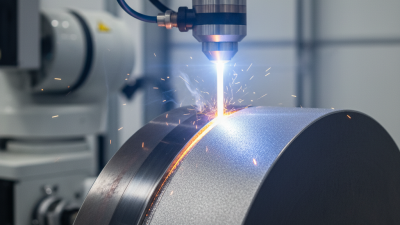
Laser Surface Engineering (LSE) represents a revolutionary approach in material science. This technique enhances material properties through precise laser treatments. Dr. John Smith, a leading expert in the field, states, "Laser Surface Engineering transforms materials at a molecular level." His words capture the essence of LSE.
The process involves modifying surfaces to improve wear resistance, corrosion resistance, and adhesion. These enhancements have broad applications in industries such as aerospace, automotive, and biomedical. However, the technology is not without challenges. The balance between cost and performance remains a concern for many industries.
Despite its advantages, LSE poses questions about long-term durability. Can treated surfaces withstand extreme conditions? Experts continue to explore these uncertainties. The future of Laser Surface Engineering will depend on addressing these complexities. Continuous innovation is key to unlocking its full potential.
What is Laser Surface Engineering?
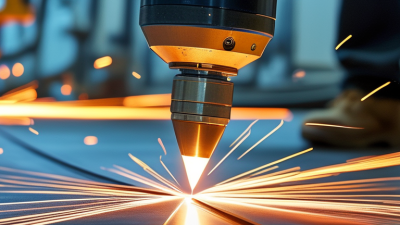
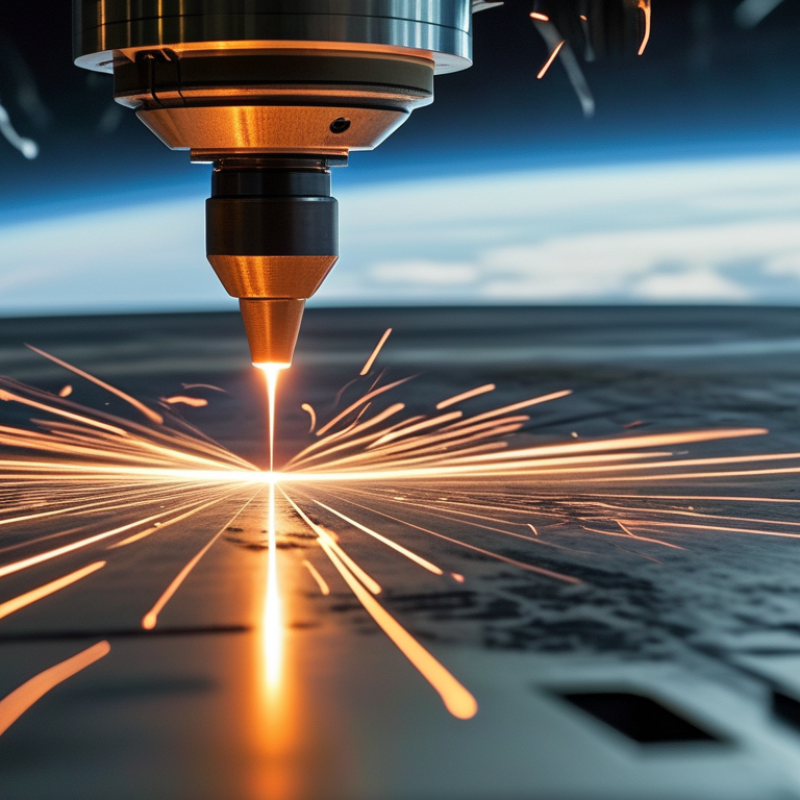
Laser surface engineering is a groundbreaking technique that enhances the properties of materials. It uses high-energy laser beams to modify surfaces at a microscopic level. This process can improve hardness, wear resistance, and corrosion resistance. By focusing on the surface, these treatments do not alter the bulk properties of the material.
The applications of laser surface engineering are diverse and impactful. Industries from aerospace to biomedical are adopting this technology. For instance, in aerospace, components are treated to withstand extreme conditions. In the biomedical field, implants are made biocompatible through surface modifications. Each application shows promise, but challenges remain.
Techniques can be expensive, and results may vary based on the material and laser parameters.
Not all applications yield perfect results. Some materials might warp under intense heat. This can lead to unexpected failures. Continuous research is necessary to address these issues. By fine-tuning the laser settings and improving process understanding, more reliable outcomes could be achieved. It’s an exciting yet evolving field that inspires cautious optimism.
Principles of Laser Surface Engineering Techniques
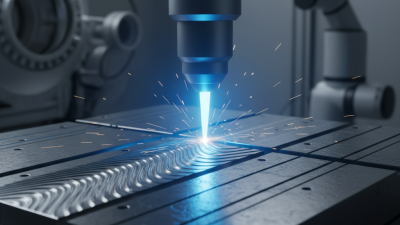
Laser surface engineering employs focused laser beams to alter the surface properties of materials. This technique enhances hardness, wear resistance, and corrosion resistance. The principles revolve around precise energy delivery to initiate desired modifications on material surfaces.
Melting and rapid cooling create unique microstructures. This process can improve performance in various industries. Most importantly, the control of laser parameters such as intensity and speed is crucial. A delicate balance must be maintained to avoid defects.
Tips: Always conduct preliminary tests to refine laser settings. Monitor the physical responses of materials closely for optimal results. Emphasizing reproducibility is key in achieving consistent outcomes. Managing expectations and learning from missteps can lead to better performance over time.
Common Methods Used in Laser Surface Engineering
Laser Surface Engineering encompasses a range of techniques that utilize laser technology for modifying the surfaces of materials. One common method is laser cladding. This technique involves melting a material onto a substrate, creating a new layer with enhanced properties. It improves wear resistance and corrosion protection. However, achieving uniform thickness can be challenging. Operators must control the laser's parameters carefully.
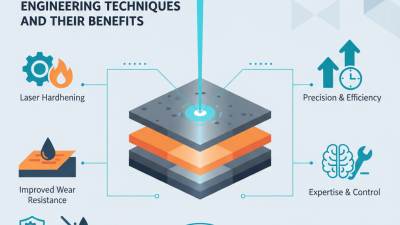
Another approach is laser hardening. In this method, lasers heat specific areas to alter their microstructure. The rapid cooling results in a harder surface. This technique is widely used in tools and machinery. Yet, inconsistent heating can lead to distortions, requiring precise experimentation.
Finally, laser texturing is gaining traction. It creates nano or micro-patterns on surfaces to influence friction and adhesion. Applications range from biomedical devices to manufacturing processes. Despite its potential, scalability and cost-effectiveness pose questions. Each method has its strengths and weaknesses, and ongoing research continues to refine these laser techniques.
Applications of Laser Surface Engineering across Industries
Laser surface engineering is revolutionizing various industries by enhancing material properties. In aerospace, lasers improve component durability. They can create precise microstructures on surfaces, increasing fatigue resistance. This is crucial for jet engines where every detail matters.
In healthcare, lasers play a significant role in medical device manufacturing. They enable the creation of biocompatible surfaces. This enhances the integration of implants into the human body. However, tailoring these surfaces for specific applications can be challenging. It requires extensive knowledge and experience.
The automotive industry benefits from laser surface treatments, too. They increase wear resistance in engine parts. This improves efficiency and extends the lifespan of vehicles. Despite these advancements, there are hurdles. Some processes can be resource-intensive and costly. Balancing performance with manufacturing expenses remains an ongoing challenge.
What is Laser Surface Engineering and its Applications?
| Industry |
Application |
Benefits |
| Automotive |
Surface hardening of engine components |
Improved wear resistance and durability |
| Aerospace |
Repair and coating of turbine blades |
Increased lifespan and efficiency |
| Medical Devices |
Surface modification of implants |
Enhanced biocompatibility and reduced infection risk |
| Electronics |
Laser texturing for better adhesion |
Improved performance and reliability of components |
| Energy Sector |
Coatings for solar panels and wind turbines |
Enhanced efficiency and longevity of renewable energy systems |
Future Trends and Developments in Laser Surface Engineering
Laser Surface Engineering (LSE) is making significant advancements, particularly in areas such as surface modification and coating applications. Future trends indicate a focused shift toward enhancing material properties, such as wear resistance and corrosion protection. Recent studies suggest that LSE can increase the hardness of steel components by 50% or more, showcasing its potential for industrial applications.
One emerging trend is the integration of artificial intelligence with LSE technologies. AI can optimize laser parameters in real time, improving efficiency and precision in treatments. This could lead to a 20% reduction in production times, a significant achievement for manufacturers. In addition, advancements in laser beam delivery systems promise to enhance the versatility of techniques used.
However, there are challenges to consider. The high initial costs associated with laser equipment and training may be a barrier for smaller enterprises. Moreover, the need for skilled operators remains crucial to maximize the benefits of these technologies. As the market evolves, continuous research will be necessary to address these barriers and improve accessibility across industries.