How to Choose the Right Powder Feeder?
Choosing the right Powder Feeder starts with the material, not the machine. Is the powder free-flowing, cohesive, abrasive, or sensitive to moisture? A dry, fine powder can behave very differently from coarse granules, even when both look easy to handle in a sample jar. That difference matters.
Next, define the required feed rate and how consistently it must be maintained. A screw feeder may suit steady dosing, while a vibratory or loss-in-weight system may be better for other materials and process demands. No feeder is ideal for every powder. Consider the hopper shape, refill method, available space, and how easily operators can clean product-contact surfaces. Small details count. A narrow outlet, for example, may encourage bridging and interrupt flow.
Performance claims should be checked against real operating conditions. Ask whether test data used your material, target rate, and expected run time. If possible, request a trial with representative powder and observe startup, refill, and shutdown behavior. Look for stable output, accessible adjustments, and clear maintenance instructions. These practical checks reveal more than a specification sheet alone.
It is tempting to choose by purchase price or maximum capacity. That can be a costly shortcut. A feeder that runs smoothly at one rate may struggle at another, and the first estimate is not always right. Revisit the assumptions. This guide outlines the key questions for comparing feeder types, evaluating accuracy, and matching equipment to your process, so you can make a measured choice rather than rely on appearance or broad claims.
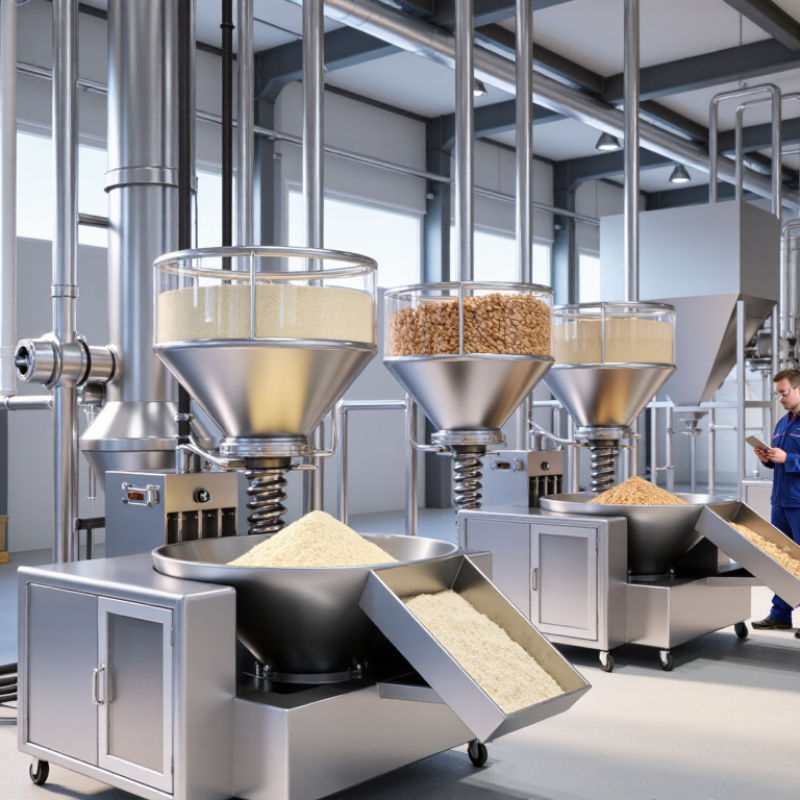
Identify the Powder’s Properties and Flow Behavior
How to Choose the Right Powder Feeder?
Identify the Powder’s Properties and Flow Behavior
Start with the powder, not the feeder catalog. Record particle size, shape, moisture, bulk density, and temperature at the feed point. Fine, cohesive powders may bridge above an outlet, while coarse granules can segregate during vibration. Check the material after storage, too. A small change in moisture can matter.
Measure flow instead of judging it by appearance. USP General Chapter <1174> describes four approaches: angle of repose, compressibility index, orifice flow, and shear-cell testing. Its Carr index scale treats 5–10% as excellent flow and roughly 33–38% as poor. These are screening ranges, not guarantees. ASTM D6128-22 provides a standardized ring-shear method to measure powder strength under consolidation. Test near the feeder’s expected stress and humidity, then compare results with a short trial run. Even a tidy measurement can miss wall friction or pulsating discharge; that limitation is easy to overlook.
Determine the Required Feed Rate and Accuracy
Choosing a powder feeder starts with a clear feed-rate target. Define the minimum, normal, and maximum rates your process needs. A feeder that runs near its limit may struggle to maintain a steady flow. One sized far above the target can make low-rate dosing harder to control. Check the required accuracy at each operating rate, not only at the average. For example, a process may need 2 kilograms per hour with a tolerance of 1 percent. That requirement should guide feeder selection and testing.
Powder behavior matters as much as the number on a specification sheet. Particle size, moisture, bulk density, and flowability can change how material leaves a hopper. Test the actual powder when possible. Weigh the output over a set time, then repeat at low, typical, and high rates. Small errors add up. Look for drift, pulsing, or bridging, and record the conditions. A first test may not represent daily operation, so allow time to adjust settings and repeat measurements.
Tips: Use a calibrated scale and collect material for long enough to reduce weighing noise. Keep the hopper level consistent during tests. Compare measured output with the target, and note any changes in feed rate. If results vary, check the powder and setup before assuming the feeder is faulty.
Compare Feeder Types and How They Work
A powder feeder controls how material enters a mixer, reactor, or packaging line. Screw feeders use a rotating auger to move powder through a tube. They suit many applications, but output can shift when bulk density or screw filling changes. A fine powder may also bridge above the inlet. It looks simple; it is not always predictable.
Vibratory feeders move powder along a tray using controlled vibration. They can handle gentle, low-rate feeding, though cohesive powders may stick or surge. Belt feeders use a moving belt and adjustable gate to meter free-flowing material. Dust buildup and uneven loading can affect delivery. Small details matter: a powder that flows well from a scoop may behave differently in a narrow hopper.
Loss-in-weight feeders track the hopper’s weight as material leaves, then adjust the feed mechanism to maintain a target rate. They can provide accurate, continuous dosing, but refills may briefly disturb the measurement. No feeder type wins in every setup. Compare the required rate, powder flow, particle size, and space available, then test with the actual material. I would not trust a choice based only on a product sheet; real powders can be awkward.
Check Material Compatibility and System Integration
How to Choose the Right Powder Feeder?
Check Material Compatibility and System Integration
Start with the powder you will actually run, not just its product description. Particle size, bulk density, moisture, and cohesion all affect how reliably material moves. Fine, cohesive powder may bridge in a hopper, while abrasive particles can wear screws and seals. Check contact materials against the powder’s chemistry, temperature, and cleaning method. Small details matter.
Test a representative sample at the intended feed rate. Measure output over several intervals, since a steady average can hide short surges or gaps. A lab sample can still mislead; production powder may arrive warmer, damper, or more compacted. That difference is easy to overlook. Record the conditions during testing, and repeat the check after changing a batch or supplier.
Consider how the feeder connects to the rest of the line. Confirm that its outlet fits the mixer or process inlet, and that controls can receive start, stop, and low-level signals. Check refill timing, mounting space, and access for cleaning. If the feeder sits on load cells, vibration from nearby equipment may affect readings. A small installation trial can reveal problems that a drawing will not.
Evaluate Testing, Calibration, and Maintenance Needs
How to Choose the Right Powder Feeder?
Evaluate Testing, Calibration, and Maintenance Needs
A feeder that runs smoothly with one powder may struggle with another. Check flow behavior, bulk density, and particle size before selecting a mechanism. ASTM D6128 shear testing reports properties such as unconfined yield strength and flow function. ASTM D6773 ring-shear testing can assess flow function and wall friction. These measurements help identify risks like arching, rat-holing, or powder sticking to hopper walls. A neat-looking hopper can still bridge.
Calibration should use the actual powder and expected operating range. Record the set rate and collected mass at low, middle, and high settings. Repeat each test after cleaning or changing the screw, belt, or hopper. Compare results against your process tolerance, not a generic accuracy claim. Keep the raw readings. They can reveal drift before product quality changes. Maintenance matters, too. Inspect seals, drive components, and powder-contact surfaces for wear or buildup. A missed cleaning step can distort test results.
Tips: Keep a simple log of powder lot, humidity, settings, and measured output. Check it weekly. One caveat: a calibration that passes today may not represent tomorrow’s powder. Re-test when material or conditions change.
How to Choose the Right Powder Feeder?
Evaluate testing, calibration, and maintenance needs before selecting a feeder.
Example requirement profile, not measured industry data. Rate each priority from 1 (low) to 5 (critical) for your process. Test feed-rate accuracy and repeatability with your actual powder, confirm the calibration procedure fits your required range, and check cleaning access and routine maintenance requirements.