Why Choose Optical Fiber Laser Technology for Your Business Needs?
In recent years, Optical Fiber Laser technology has revolutionized manufacturing processes across various industries. According to a recent report by ResearchAndMarkets, the global fiber laser market is expected to reach $5.79 billion by 2027, growing at a CAGR of 10.9%. This growth underscores the increasing adoption of Optical Fiber Laser systems in sectors such as automotive, aerospace, and electronics.
Industry expert Dr. Emily Chen states, “Optical Fiber Lasers offer unparalleled precision and efficiency for intricate industrial applications.” These lasers are compact and deliver excellent performance, making them ideal for high-speed production. Their ability to pierce through different materials with minimal distortion is noteworthy. However, integrating this technology can pose challenges. Companies must assess their needs and existing infrastructure.
Many businesses explore Optical Fiber Laser solutions, yet some underestimate the initial investment required. While the long-term benefits are significant, the transition demands careful planning. Companies should weigh the upfront costs against potential gains in productivity and product quality. With the right approach, Optical Fiber Laser technology can define the future of manufacturing.
Advantages of Optical Fiber Laser Technology in Industrial Applications
Optical fiber laser technology is gaining traction in various industrial applications. Its precision and efficiency are impressive. According to the 2022 Global Laser Market Report, the optical fiber laser segment is expected to grow at a CAGR of 15.2% from 2023 to 2030. This growth signifies increasing adoption across many sectors.
One of the main advantages is energy efficiency. Optical fiber lasers consume less energy compared to traditional laser systems. They have a conversion efficiency of over 30%, which minimizes operational costs. In industries focusing on sustainability, this is a critical factor. Moreover, these lasers deliver higher-quality cuts and markings, reducing the need for post-processing. However, some users find them challenging to set up initially.
Another benefit is their versatility. They can handle a variety of materials, from metals to plastics. A study from the International Journal of Manufacturing Science stated that fiber lasers could cut stainless steel up to 25mm thick with exceptional speed. Despite these benefits, there’s room for improvement in user training. Many operators might not fully utilize the technology’s capabilities due to a lack of expertise. This gap can lead to inefficiencies that need addressing.
Why Choose Optical Fiber Laser Technology for Your Business Needs?
| Feature |
Description |
Advantage |
| High Precision |
Optical fiber lasers offer exceptional cut quality and detail. |
Minimized material waste and enhanced product quality. |
| Versatility |
Suitable for a wide range of materials including metals, plastics, and ceramics. |
Adaptable for different applications such as cutting, welding, and engraving. |
| Low Maintenance |
Fewer moving parts compared to traditional laser systems. |
Reduced operational costs and improved uptime. |
| Energy Efficiency |
Optical fiber lasers have higher electrical-to-optical conversion efficiency. |
Lower energy consumption leads to reduced utility costs. |
| Performance |
Fast processing speeds with high beam quality. |
Increased productivity and throughput in manufacturing. |
Cost Efficiency: How Optical Fiber Lasers Reduce Operational Expenses
Optical fiber laser technology is becoming a go-to choice for many businesses. This shift is largely due to its cost efficiency. These lasers operate with minimal maintenance and energy usage. This leads to significant reductions in operational expenses. A recent study showed that companies switching to optical fiber lasers cut their electricity bills by 30% or more.
However, investing in this technology is not without its challenges. Initial setup costs can be steep, and adapting to a new system may require training. Employees might need time to adjust to the new equipment. But once these hurdles are overcome, the long-term savings can be impressive.
Additionally, the precision of optical fiber lasers minimizes material waste. This further improves cost-effectiveness and efficiency. Many businesses report higher production rates while spending less. Yet, it is crucial to evaluate whether the transition aligns with specific operational goals. A hasty decision could lead to regrets if the technology does not fit a company’s unique needs.
Precision and Accuracy: The Impact of Optical Fiber Lasers on Manufacturing
Optical fiber lasers have revolutionized manufacturing by enhancing precision and accuracy. These technologies can cut through various materials with remarkable finesse. For instance, when working with metals, optical fiber lasers produce clean edges and reduce the need for secondary finishing. This leads to a smoother workflow.
However, integrating this technology into existing systems can be challenging. Employees need training to operate new machinery effectively. There can be a steep learning curve. Mistakes during this period might cause delays, impacting production schedules. Yet, the long-term benefits often outweigh initial hurdles.
Moreover, optical fiber lasers offer versatility. They can handle different materials and thicknesses. This flexibility allows businesses to broaden their service offerings. But, switching between tasks can disrupt workflow. Constant adjustments may lead to errors. Fine-tuning settings for maximum efficiency takes time and experience. Continuous evaluation is essential for optimizing performance and minimizing downtime.
Versatility of Optical Fiber Lasers in Diverse Business Sectors
The versatility of optical fiber lasers offers immense potential across various business sectors. In manufacturing, these lasers excel in cutting, welding, and marking operations. For instance, a recent industry report noted that the global market for fiber lasers is projected to reach over $5 billion by 2025. This growth is driven by their efficiency and precision, making them an attractive option for industries like automotive and aerospace.
In addition to manufacturing, optical fiber lasers are increasingly relevant in the medical field. They are used for surgical procedures and medical device production. According to a market analysis, the demand for laser applications in healthcare is set to grow at a rate of 15% annually. This rapid evolution presents both opportunities and challenges. Businesses must stay updated with regulatory changes while addressing costs associated with advanced technologies.
Despite the advantages, embracing optical fiber lasers is not without its hurdles. Some companies struggle with the initial investment and the need for specialized training. Additionally, the reliance on this technology demands regular maintenance, which can be a costly endeavor. While the benefits seem clear, businesses must evaluate their readiness to adopt these powerful tools effectively.
Environmental Impact and Sustainability Benefits of Fiber Laser Technology
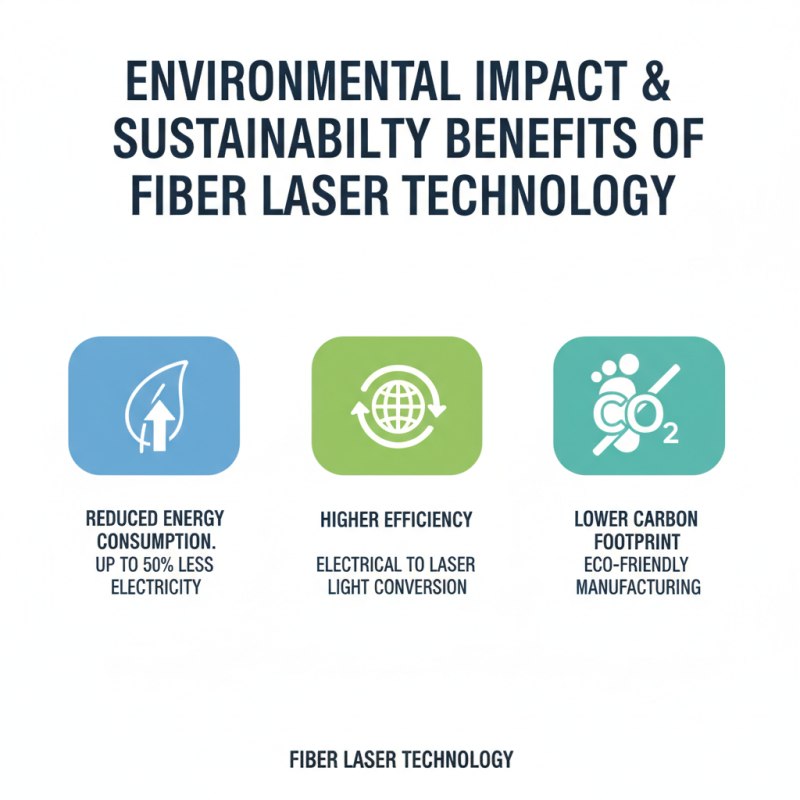
Fiber laser technology presents numerous environmental advantages. It significantly reduces energy consumption compared to traditional laser systems. These lasers are more efficient in converting electrical energy into laser light. Thus, they lower the overall carbon footprint of manufacturing processes.
Moreover, fiber lasers produce minimal waste. They offer precise cutting and engraving, which means less material is lost during production. This capability helps companies optimize their resources. Additionally, the lifespan of fiber lasers is often longer than other types. This longevity reduces the frequency of replacements, leading to less electronic waste over time.
The sustainability of fiber laser technology goes beyond efficiency. Many components used are recyclable. As industries strive for greener practices, adopting fiber laser systems aligns with these goals. However, the initial investment can be daunting for some businesses. It's crucial to evaluate the long-term benefits versus upfront costs. It's a challenging decision, but one that could provide significant rewards.