Best Cladding Technology Suppliers in China?
Choosing among the best cladding technology suppliers in China takes more than comparing catalogues or headline prices. A façade must suit the building, local climate, installation method, and maintenance plan. A supplier’s sample may look excellent under showroom lights. The real test comes on site, where rain, wind, heat, and workmanship all matter.
Building scientist Dr. Joseph Lstiburek has stated, “There is no such thing as a perfect wall.” That is a useful reminder when evaluating Cladding Technology. No panel or system can compensate for every design flaw. Buyers should ask suppliers for verifiable project references, clear technical data, documented quality controls, and practical guidance on detailing. Check how the proposed system handles water drainage, thermal movement, fire performance, and replacement of damaged components. Ask who provides installation training and what support remains available after delivery.
This guide will compare Chinese suppliers by product range, manufacturing capability, customization, quality documentation, and export experience. It will also outline questions to ask before requesting a quotation. Treat supplier claims as starting points, not proof. Request current test reports and confirm that they apply to the exact product and configuration being offered. Details can be easy to miss. Even a careful comparison has limits: project conditions vary, and a factory visit cannot reveal everything about long-term performance. The aim is not to name one universal winner, but to help readers build a shortlist that fits their project and verify it with evidence.
What Cladding Technology Covers in Building and Industrial Applications
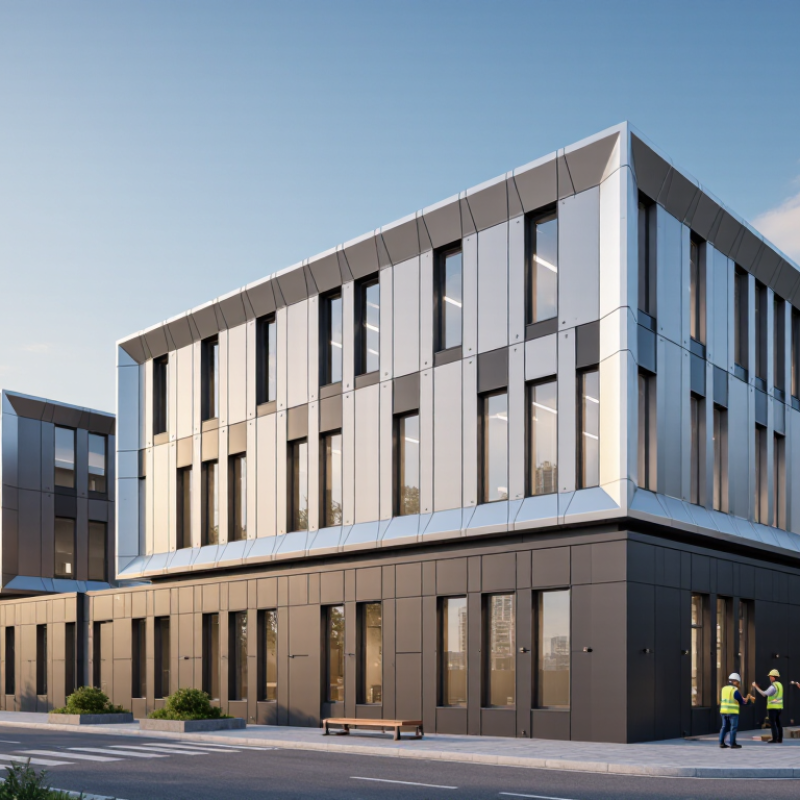
Cladding technology is more than an exterior finish. It includes the panels, support rails, anchors, insulation, cavities, coatings, and details that connect a façade to a building. These parts work together to manage rain, heat, wind, and movement. A small gap or poorly placed fixing can affect the whole assembly.
In buildings, systems may include ventilated rainscreens, insulated metal panels, or stone and ceramic façades. Design choices depend on the substrate, exposure, panel size, and maintenance access. For example, a coastal project may need durable finishes and carefully selected fasteners. Water drainage matters. So does thermal movement. A neat drawing does not always match site conditions, and that is worth checking early.
Industrial cladding often faces different demands, including moisture, temperature changes, dust, or corrosive environments. Suppliers in China may offer material processing, fabrication, coating, and technical coordination, but capabilities vary. Ask for clear specifications, sample details, test documentation, and installation guidance. Compare how a supplier handles tolerances and replacement parts, not only panel price. One overlooked issue is the interface between cladding and doors, ducts, or pipework. It can become expensive later.
Cladding Technologies Across Building and Industrial Applications
This illustrative comparison maps common cladding systems to typical application sectors. A value of 1 indicates a commonly used application; 0 means it is not a typical primary application. Actual suitability depends on project requirements, local codes, and system design.
Which Factors Define a Reliable Cladding Technology Supplier
A reliable cladding technology supplier can explain how its system performs beyond a polished brochure.
Ask for project-specific test data, material specifications, and clear guidance on installation. Reports should identify what was tested and under which conditions. Vague claims are difficult to verify. A sample panel can reveal finish quality, joint alignment, and how edges are handled.
Technical fit matters.
The supplier should ask about the building’s exposure, substrate, movement, and maintenance needs before recommending a system. For example, a coastal site may require careful attention to corrosion resistance and fixings. Check whether components are traceable and whether production tolerances are documented. A dependable team also explains limitations, rather than promising one solution for every façade.
Support after delivery counts.
Ask who answers technical questions, how defects are recorded, and whether installation teams receive usable details. References from comparable projects can help, but look for specifics such as building type, system scope, and service history. A perfect brochure proves little. I would still verify claims against project records and a physical sample; no checklist catches everything, and supplier responsiveness can change under pressure.
How China’s Cladding Supplier Landscape Is Organized
China’s cladding supplier landscape is organized less by one clear ranking than by materials, production roles, and project scope. Some factories focus on aluminum panels or metal sheets. Others make fiber-cement, ceramic, or high-pressure laminate boards. A fabricator may cut and finish panels, while a system supplier also coordinates brackets, rails, and installation details. These roles can overlap.
It matters.
For a project team, the useful distinction is what a supplier actually controls. Ask who checks panel tolerances, coating consistency, and packing before shipment. Request technical data and test records that match the proposed assembly, not just a similar-looking product. A sample panel can show color and finish, but it cannot confirm how the full wall performs in wind or rain.
Not always.
Export experience, clear drawings, replacement-part planning, and communication across time zones also shape delivery quality. Some suppliers are strong at manufacturing but less prepared for design coordination; that gap is easy to miss in a polished quotation. Comparing suppliers by material expertise, documented quality checks, and support after delivery gives a more practical picture than relying on broad claims about size or capacity.
How to Compare Supplier Capabilities, Materials, and Certifications
When comparing cladding technology suppliers in China, look beyond catalog photos. Ask how the team handles design changes, panel tolerances, and installation details. Request production samples, shop drawings, and inspection records for a recent project. A neat sample matters, but repeatable quality matters more. Check whether the supplier can explain its testing process in clear, specific terms.
Compare materials against the building’s exposure and maintenance needs. Aluminum panels are lightweight, while steel may suit projects needing greater rigidity. Fiber cement and high-pressure laminate offer different surface and durability options. Ask for test data covering fire performance, weather resistance, and coating durability where relevant. Verify certificates with the issuing body, and confirm that their scope matches the exact product and factory. A certificate for one panel type may not cover another. No supplier is perfect; even a strong factory may have limited experience with unusual geometries.
Tips: Visit the production site if practical. Check cutting equipment, storage conditions, and finished-panel packaging. Ask for a small mock-up before placing a large order. Keep written records of approved colors and dimensions. Small details get missed. One useful question: “What changed after your last quality issue?” The answer can reveal how the supplier learns.
What to Verify Before Selecting a Cladding Supplier in China
When assessing a cladding supplier in China, verify that its actual production capacity matches your project, not just its showroom samples. Ask for recent photos or a live factory tour, and check which processes are performed in-house. Small details matter. Request technical data for the proposed material, including thickness tolerances, coating specifications, and installation requirements. Compare these details with your drawings and site conditions.
Check test reports and certificates with the issuing organization. Confirm that each document covers the exact product, finish, and intended use, and that it remains current. Fire performance and weather resistance should be assessed against the requirements for your project location. Ask for inspection records, defect-handling procedures, and references from comparable projects. A sample is useful, but one attractive panel cannot prove consistent production across a full order.
Clarify how the supplier controls color variation between batches, protects panels for transport, and handles replacements. Put agreed specifications, inspection stages, delivery dates, and warranty limits in writing. I would not rely on a broad promise such as “international quality”; it is too vague to resolve a dispute. Buyers can also overlook communication gaps. Have technical answers confirmed in writing, and allow time to review a production sample before approving the order.